Wine Labs · Market intelligence
7 Most Expensive Wine Records and Auctions
Explore the most expensive wine records and auctions, with provenance, price context, buyer motivations, and tools for comparing fine-wine markets.
The most expensive wine sold at auction is a 1945 Domaine de la Romanée-Conti, which reached $812,500 in March 2026. That figure only answers the question if “most expensive” means the highest verified realized price for a single auction bottle.
The answer changes when you compare a confirmed sale with a retail asking price, an exchange benchmark, or a pre-sale estimate. Provenance, bottle format, vintage, condition, buyer purpose, and sales channel can all change what a headline number means. This roundup ranks the evidence by market context, not by treating every expensive listing or estimate as equivalent. It uses Wine Labs for cross-channel price intelligence and the supplied auction and market sources for record verification, giving collectors, merchants, investors, and institutions a clearer way to interpret the most expensive wine claims.
Table of Contents
- 1. Wine Labs
- 2. Wine-Searcher
- 3. Liv-ex
- 4. Sotheby's Wine
- 5. Christie's Wine
- 6. iDealwine
- 7. Wine Market Journal
- Top 7 Most Expensive Wine Sources Comparison
- How to Read a Record Price Before You Buy
<a id="1-wine-labs"></a>
1. Wine Labs
Wine Labs is the strongest starting point when the question isn't “What bottle has the highest price?” but “Which price should I trust for this decision?” The platform consolidates retail, auction, exchange, restaurant, airline, cruise, and specialty-channel data into a comparable market view, helping users separate a confirmed transaction from an asking price or an indicative benchmark. That distinction matters because the auction record belongs to an exceptional provenance event, while broader market prices can move in a different direction.
Its core advantage is identity normalization. Wine listings often vary by producer name, cuvée, vintage, bottle size, label spelling, and LWIN reference. Wine Labs resolves those variations into canonical records, then adds historical price tracking, trend indicators, cross-channel comparisons, alerts, and portfolio tools. A customer case study reports 94.5% matching coverage in an investment-platform deployment, a useful indication of the platform's identity-matching performance in that documented workflow.
<a id="a-practical-layer-for-pricing-and-sourcing"></a>
A practical layer for pricing and sourcing
The platform combines several workflows that are usually scattered across separate systems:
- Market analytics: Review price histories, movement indicators, gainers and decliners, and channel-level benchmarks.
- Portfolio valuation: Use Cellar Pricer, portfolio tracking, watchlists, and alerts to monitor holdings at scale.
- Programmatic access: Connect Wine Matching API, Wine Label API, REST endpoints, custom feeds, and private datasets to existing systems.
- AI-native research: Use MCP agents to surface vintage analyses and portfolio insights inside Claude, Codex, or custom agents.
- Editorial monitoring: Follow auction digests across dozens of houses and news digests from hundreds of outlets and influencers.
That breadth gives Wine Labs a different role from an auctioneer. Sotheby's or Christie's can validate a specific realized lot. Wine-Searcher can show current merchant offers. Liv-ex can provide professional exchange benchmarks. Wine Labs is designed to put those signals beside one another so a buyer doesn't mistake one channel for the whole market.
Pricing isn't published publicly. Wine Labs offers a free account and self-service entry points, while enterprise features, custom feeds, and API access are handled through sign-up or a demo. For teams comparing the most expensive wine records with current sourcing opportunities, Wine Labs is the most useful platform in this list for building a repeatable evidence trail rather than collecting isolated headlines.
<a id="2-wine-searcher"></a>
2. Wine-Searcher
Wine-Searcher provides a retail benchmark, answering a specific question: What are merchants asking for this wine right now? Its comparison engine brings together live offers, producer pages, vintage details, critic material, availability, rankings, and market commentary. This makes it useful for locating bottles marketed as the most expensive wine in retail, while keeping the price signal in perspective. A listing records seller intent, not a completed purchase.
That distinction matters most at the top of the market. A rare bottle may carry a high asking price because supply is limited, provenance is unusual, or the merchant is testing demand. Until a transaction is documented, the figure should remain an offer rather than an auction result or exchange-cleared benchmark.
Search Wine-Searcher by producer, region, grape, vintage, and bottle type to compare active listings. Producer and vintage pages can show the upper edge of retail pricing, while availability results reveal which merchants are presenting the bottle and in what context. Editorial rankings and commentary add market context, but they do not convert an asking price into a realized value.
The platform's limitation follows from its purpose. It is centered on retail offers, not a complete archive of auction outcomes. Historical pricing tools and some shop details require PRO access, and a retail average cannot establish the value of one bottle with a particular cellar history. Format, condition, and provenance can materially change the comparison.
For context on how Wine-Searcher fits within wider wine-market signals, see the Wine Labs analysis of Wine-Searcher and wine-market trends. Use the platform to define a current asking-price range, then test any trophy claim against a realized sale with the same vintage, format, condition, and provenance where possible. Visit Wine-Searcher for live merchant comparisons.
<a id="3-liv-ex"></a>
3. Liv-ex
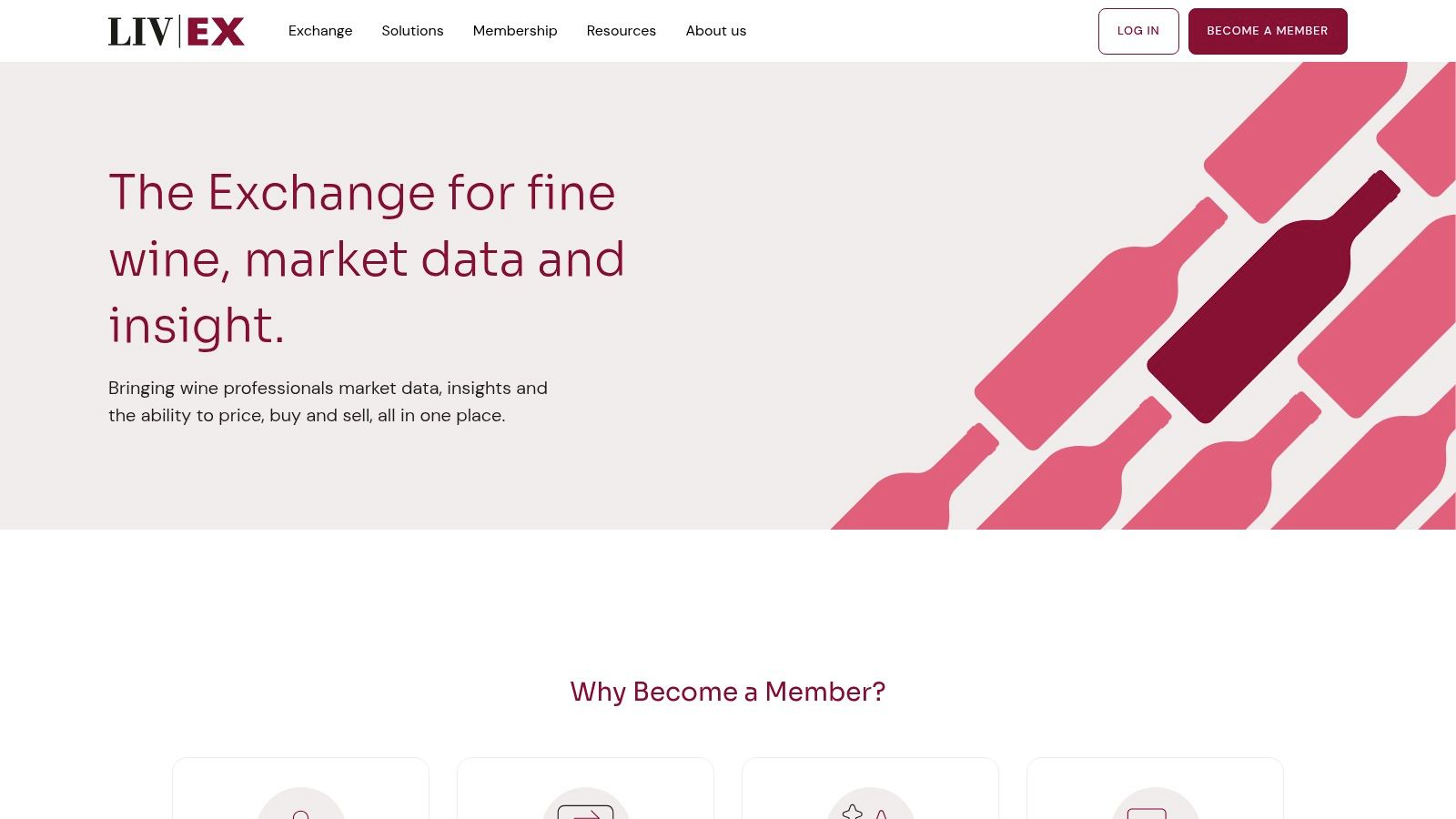
Liv-ex provides a professional-market benchmark rather than a single record headline. Its exchange activity, indices, historical data, and LWIN identifiers help distinguish seller indications, representative benchmarks, and auction-derived prices. The platform is therefore useful for testing whether an apparent trophy price reflects a broader market reference or a one-off buyer decision.
Its fields require careful reading. Market Price may describe a current market indication, while a Benchmark represents a defined reference point and an Auction Price records auction evidence. None automatically equals the latest completed trade or the price a holder can realize immediately. Bid and offer levels, transaction history, bottle format, and provenance all affect the conclusion.
<a id="why-exchange-evidence-changes-the-ranking"></a>
Why exchange evidence changes the ranking
A realized auction result captures one lot, one sale date, and the intent of the winning buyer. Exchange evidence serves a different purpose. It can support recurring valuations, portfolio analysis, and comparisons across markets because professional participants use consistent identifiers and price fields. That makes it a stronger benchmark for repeatable analysis, even when an auction produces the higher headline.
Liv-ex is particularly useful for:
- Separate price signals: Market Price, Average or Benchmark, and Auction Price answer different valuation questions.
- Trading context: Bids, offers, and last-trade information indicate liquidity and buyer intent.
- Canonical identification: LWIN identifiers reduce confusion between similar labels, vintages, and formats.
- Professional workflows: Programmatic feeds support pricing and valuation processes.
Access is limited to bona fide wine businesses, and package pricing is not publicly listed. The restriction reduces its value for casual shoppers but suits organizations that need consistent market evidence. Wine Labs' fine-wine market data capabilities complement exchange data by combining several market signals in one analytical view. Explore Liv-ex when the question is not “What is the record?” but “Which benchmark can a professional portfolio defend?”
<a id="4-sothebys-wine"></a>
4. Sotheby's Wine
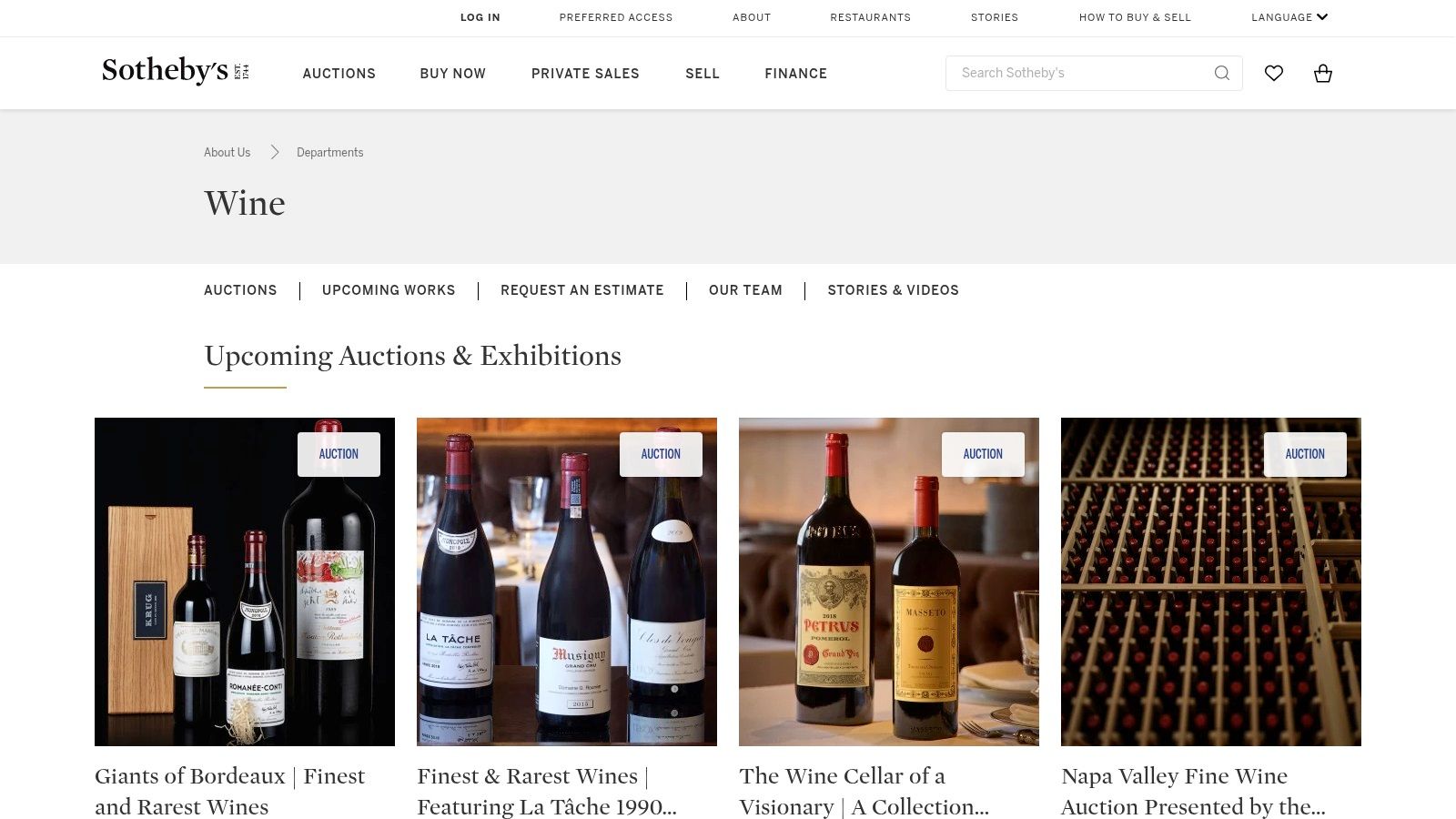
A Sotheby's result is strongest when the question is what a buyer paid at auction. Sale calendars, lot pages, past-auction records, hammer results, and single-owner cellar dispersals let readers check the bottle, format, condition, and sale context. That realized price is a firmer signal than an uncompleted retail offer, although it still describes one transaction rather than a universal market value.
The 2018 Sotheby's New York sale set the prior single-bottle record: a 1945 Domaine de la Romanée-Conti sold for $558,000 on 13 October 2018, according to Guinness World Records. The same bottle later sold for $812,500 at Acker's La Paulée auction in New York in March 2026, as reported by Wine Spectator's record-wine coverage. The change in result reinforces the value of auction evidence while limiting its reach: provenance, buyer intent, timing, and venue can materially shape the headline.
Sotheby's records are most useful for four checks:
- Lot-level verification: Confirm the bottle, format, vintage, condition notes, and sale details.
- Provenance: Assess whether a single-owner or notable cellar history helps explain competition.
- Geographic comparison: Review results from London, New York, and Hong Kong without treating them as identical markets.
- Historical context: Compare a record lot with earlier sales involving the same producer or vintage.
Past-auction records may require registration or sign-in, and details can be spread across separate sale pages. Separate the hammer amount from the final invoice, which may include a buyer's premium and other charges. Use Sotheby's Wine for a primary auction reference, not a market-wide estimate.
<a id="5-christies-wine"></a>
5. Christie's Wine
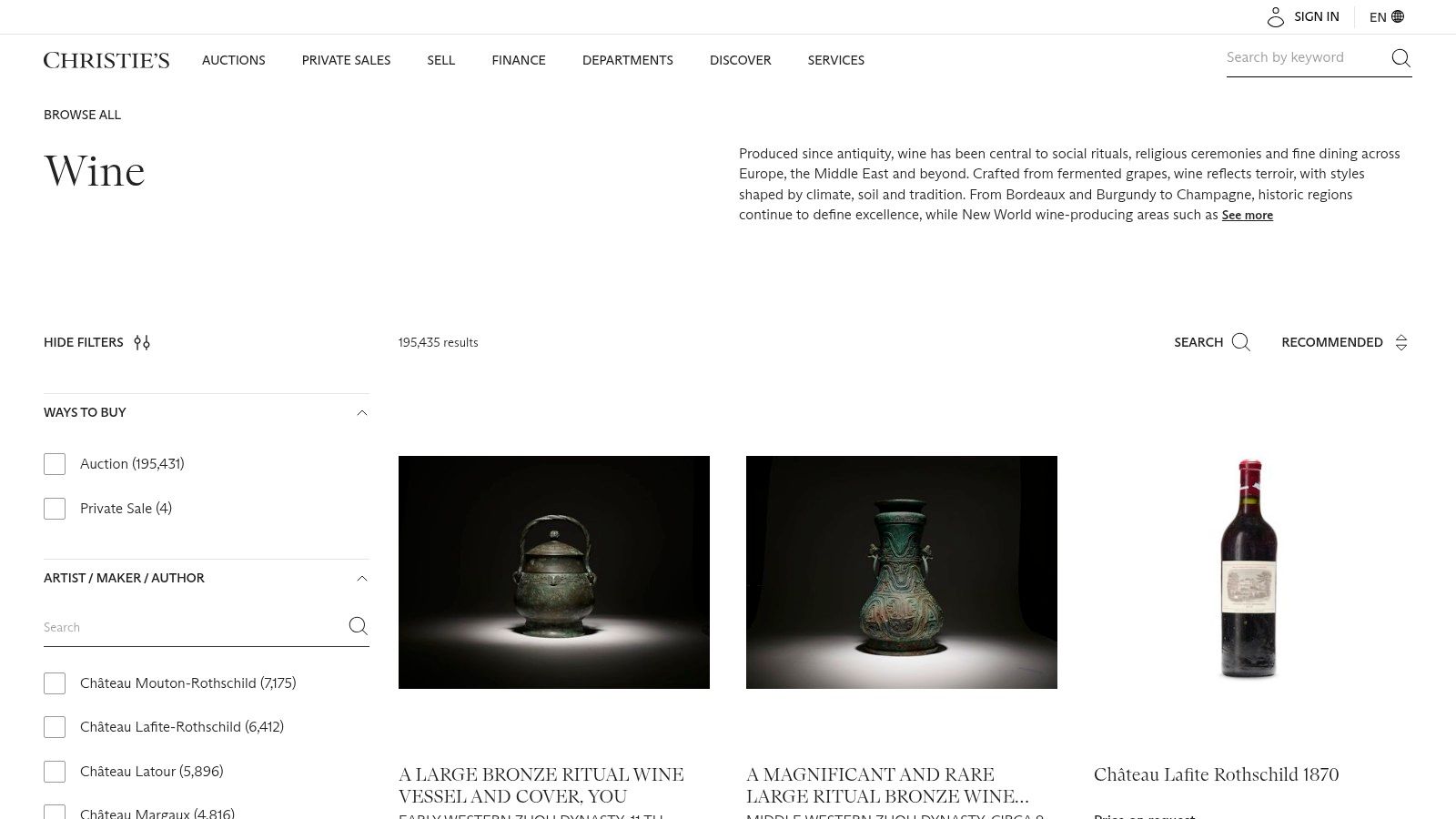
Christie's provides useful auction evidence, but its records should be ranked by price signal. A completed lot offers realized-market data. A current listing shows an asking price, while an estimate indicates expected bidding. The distinction matters when comparing rare bottles, formats, and provenance.
A notable benchmark came from Christie's Geneva sale in November 2010, where a 1947 Cheval-Blanc sold for $304,375. Reuters reported that the bottle used an amp-sized format and that Christie's described the transaction as a new world record for a single bottle sold at auction. Format therefore changes the comparison: a large bottle and a standard bottle carry different scarcity, storage, and collector considerations.
<a id="cross-checking-the-headline"></a>
Cross-checking the headline
Christie's records also provide context for the effect of cellar provenance. In 2018, five bottles from Robert Drouhin's personal cellar brought $1.98 million combined at Sotheby's, with each bottle surpassing the previous record for the most expensive bottle of any size, excluding charity sales. Two 1945 Domaine de la Romanée-Conti bottles also exceeded the earlier standard-bottle record of $233,000 from a Hong Kong sale in 2010, according to the contemporary report on the Sotheby's sale. The result reflects buyer interest in documented ownership as well as the wine itself.
Christie's is most useful when its completed sales are checked against other houses. Archives can be uneven, and information may appear across sale pages or PDFs. A Christie's offer remains an asking price until a buyer completes the transaction, so it should not be treated as equivalent to a Sotheby's hammer result. The Christie's January 2026 auction digest can surface relevant activity, while Christie's Wine is the primary place to verify the house's own listings and sale information.
<a id="6-idealwine"></a>
6. iDealwine
iDealwine provides a useful European benchmark for secondary-market estimates and realized auction activity, particularly for rare Burgundy, Rhône, Loire, and other regional labels. Its Cote iDealwine database updates weekly from recent auction outcomes, producing a reference grounded in observed transactions rather than one seller's ambition. The platform also combines auctions with fixed-price listings, so asking prices and clearing prices can be compared without treating them as equivalent.
Its 2025 barometer supplies market context. Average bottle prices fell to €137, while auction volume rose 18.5% and total value reached €42.4 million, according to WineNews' report on the iDealwine 2025 barometer. These figures describe broad auction turnover, not the pricing power of a singular trophy bottle. The 2026 record of $812,500 for one 1945 Domaine de la Romanée-Conti therefore belongs to a different evidence category.
A record lot captures scarcity, buyer intent, and provenance. An average auction price captures the clearing behavior of a much wider group of bottles. The first is a strong signal for an exceptional, well-documented bottle, while the second is a broader benchmark with less direct relevance to a rare cellar-backed holding.
iDealwine is most useful for:
- Recent-result estimates: Cote iDealwine converts auction evidence into a practical reference.
- European comparables: Regional depth supports research into classic French categories.
- Price-signal checks: Fixed-price offers show seller expectations, while auctions show completed demand.
- Market context: Barometers help place an individual result within wider activity.
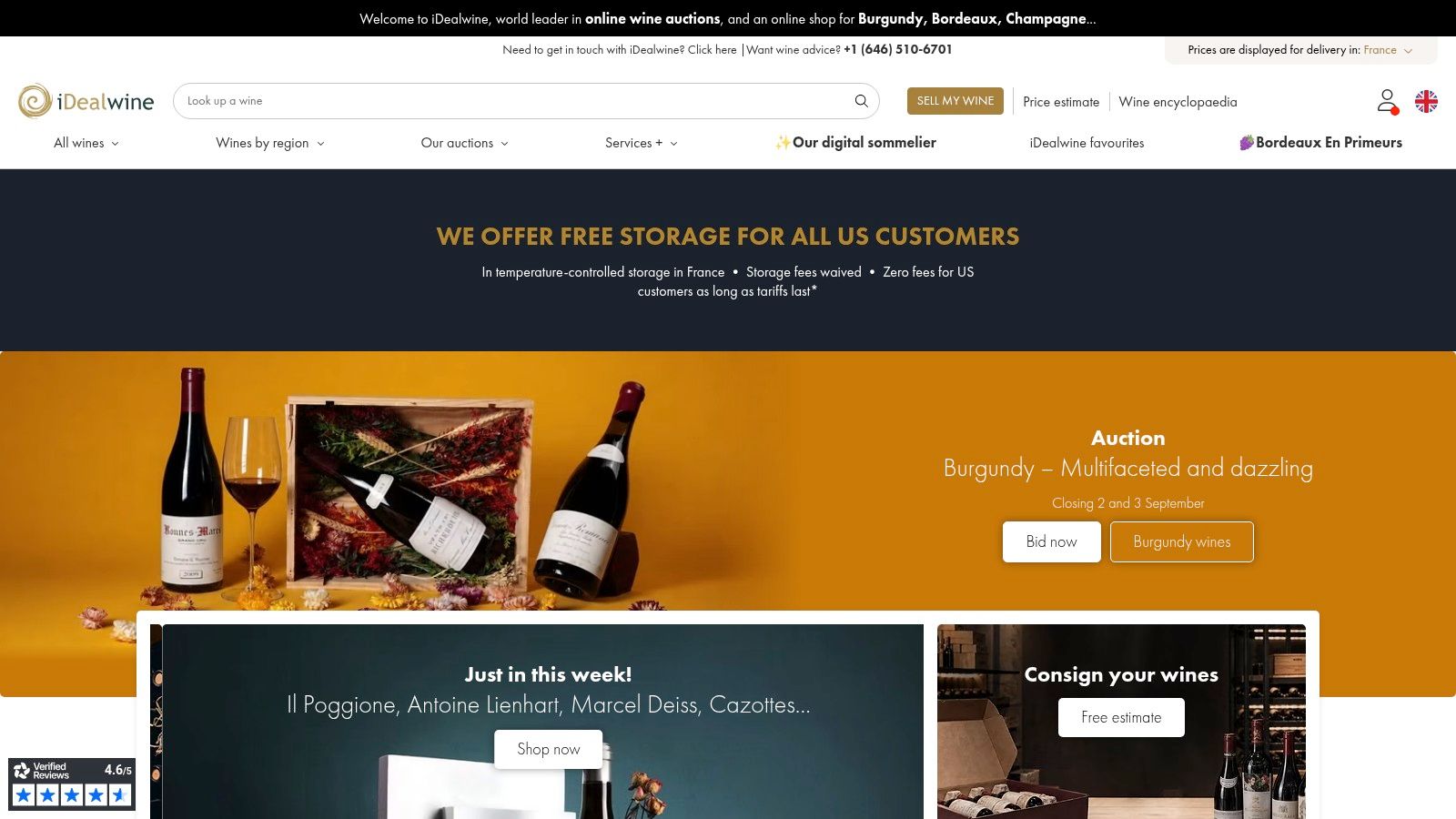
The limitation is scope. iDealwine reflects European dynamics and does not replace a global, multi-house archive. Use iDealwine to test a proposed value against recent European evidence, then match vintage, format, condition, provenance, and transaction type. The platform's auction image also illustrates the kind of listing context buyers should inspect before comparing prices.
<a id="7-wine-market-journal"></a>
7. Wine Market Journal
Wine Market Journal is most useful when one headline result is too narrow to support a valuation. Its database brings auction outcomes from multiple houses into a searchable record by producer, vintage, format, and sale house. That makes it possible to test an exceptional bottle against comparable lots rather than treating a single realized price as a market benchmark.
The price signal remains auction evidence, not a retail asking price or an estimate. A collector researching a high-priced Burgundy can compare standard bottles with larger formats and review results across sale dates. A merchant or investor can then judge whether a price reflects recurring demand or an isolated combination of scarcity, provenance, condition, and buyer intent.
<a id="a-research-first-tool"></a>
A research-first tool
Wine Market Journal suits:
- Cross-house comps: Compare realized auction results without checking each house archive separately.
- Format-sensitive research: Keep standard bottles and larger formats in separate comparison sets.
- Long-run histories: Examine how a producer or vintage has traded over time.
- Professional valuation: Assemble evidence for acquisition, insurance, or portfolio review.
Its limitation is access. Full functionality requires a professional subscription, and the interface favors research depth over quick consumer searches. Aggregated results also need a provenance check. The original sale record may clarify bottle condition, lot description, buyer's premium treatment, and other details that change how a final price should be read.
Use Wine Market Journal to build a defensible comparison set, especially for rare bottles with few close references. It can show whether an auction record sits within a pattern of realized prices, but it cannot by itself establish a fair retail asking price or confirm that two apparently similar bottles carry equivalent provenance.
<a id="top-7-most-expensive-wine-sources-comparison"></a>
Top 7 Most Expensive Wine Sources Comparison
| Item | Implementation & Integration 🔄 | Resource Requirements ⚡ | Expected Outcomes & Impact 📊⭐ | Ideal Use Cases & Tips 💡 | Key Advantages ⭐ |
|---|---|---|---|---|---|
| Wine Labs | Moderate–High: API-first platform; onboarding and mapping required | Technical team for API/feeds; free trial available; enterprise demos for custom feeds | Real-time cross-channel pricing; high identity-matching (~94.5%); portfolio valuations (⭐⭐⭐⭐⭐) | Merchants, importers, collectors needing live market intelligence; tip: request demo for custom feeds | Canonical matching, programmatic feeds, AI agents, portfolio tooling |
| Wine-Searcher | Low: web-first; PRO tools for deeper access | Free for spot checks; PRO subscription for histories and valuations | Fast, extensive retail coverage for benchmarking and leaderboards (⭐⭐⭐⭐) | Quick price checks and consumer research; tip: upgrade to PRO for historical analysis | Largest retail breadth; fast leaderboards; producer/vintage pages |
| Liv-ex | Medium–High: exchange integration; membership and feed setup | Membership qualification; sales-driven pricing; professional systems integration | Transaction-driven benchmarks, indices and exchange prices for institutional models (⭐⭐⭐⭐⭐) | Professional traders, index builders and automated valuation pipelines; tip: plan for membership process | Institutional, trade-level data; LWIN identifiers; indices (e.g., Liv-ex 100) |
| Sotheby's Wine | Low–Medium: searchable auction site; registration for full results | Register/sign in for full past-auction access; limited programmatic access publicly | Authoritative realized prices for marquee lots and record sales (⭐⭐⭐⭐) | Verifying top-end hammer prices and provenance; tip: use sale calendars and hammer results pages | Primary source for record-setting lots; global auction reach |
| Christie's Wine | Low–Medium: searchable archives; varied formats across sales | Registration may be required; some data in PDFs and sale pages | Authoritative hammer prices and high-profile cellar dispersals (⭐⭐⭐⭐) | Cross-checking auction results and provenance; tip: compare house results for consistency | Strong provenance standards; global coverage; useful for cross-house validation |
| iDealwine | Low: web auctioneer with price-estimate database (Cote iDealwine) | Free estimates and reports; auction participation for realized results | Weekly-updated estimates tied to recent EU auction outcomes (⭐⭐⭐⭐) | European-focused collectors and traders (Burgundy/Rhône); tip: rely on Cote for recent EU trends | Transparent weekly estimates; strong European secondary-market coverage |
| Wine Market Journal | Medium: subscription research platform; paywalled access | Professional subscription required; research-oriented interface | Broad cross-house hammer-price database and long-run comps (⭐⭐⭐⭐⭐) | Valuation research, comp sets and professional historical analysis; tip: subscribe for full historical depth | Broadest dedicated auction hammer coverage; deep historical analytics |
<a id="how-to-read-a-record-price-before-you-buy"></a>
How to Read a Record Price Before You Buy
A record price is only useful when you know what it measures. Start by confirming the bottle identity and format. Producer, cuvée, vintage, bottle size, and condition must match before you compare two results. The 1947 Cheval-Blanc record illustrates the point: its amp-sized format makes it unsuitable as a direct equivalent for a standard bottle.
Next, separate the hammer price from the buyer's premium and other costs. Auction headlines may foreground the hammer amount, while the buyer's invoice can be higher. A retail listing is different again. It expresses a seller's asking price, not a completed transaction. Exchange data may represent a last trade, bid, offer, or calculated benchmark, while an estimate reflects an informed expectation before the sale.
Practical rule: Never use a record lot as a valuation shortcut until you've matched its vintage, format, provenance, condition, and sales channel.
Provenance deserves its own review. The 2018 Sotheby's evidence shows how a prestige personal cellar can shape buyer intent, with five bottles from Robert Drouhin's cellar bringing $1.98 million combined and the entire 1945 consignment selling for $7.3 million, five times its pre-sale high estimate, according to the sale report from Wine Investment. That doesn't mean every bottle of the same wine carries the same premium. It means provenance can become part of the lot's identity.
<a id="match-the-evidence-to-the-buyer"></a>
Match the evidence to the buyer
Collectors may prioritize rarity, condition, and cellar history. Merchants need replacement cost and current offers. Investors need repeatable benchmarks and historical movement. Institutions and luxury-hospitality programs may care about sourcing reliability, documentation, and the credibility of the bottle's story as much as its auction record.
The broad market provides a final guardrail. A single trophy sale can set a record while the average auction bottle moves differently. That is why Wine Labs' cross-channel view matters. It can normalize identities, connect retail and auction records, track historical movement, compare exchange and restaurant signals, value portfolios, and trigger alerts when a relevant listing or price changes.
Before buying, document the source, the date, the price type, the bottle format, and the provenance evidence. Then ask whether you're buying a verified market transaction, an asking price, an estimate, or an investment thesis. That discipline won't remove uncertainty, but it will stop a spectacular headline from doing more analytical work than it deserves.
Wine Labs brings retail, auction, exchange, and restaurant pricing into one comparable view, with historical tracking, portfolio valuation, identity matching, and alerts for changing market signals. To investigate the most expensive wine claims with better provenance and channel context, visit Wine Labs and build a clearer evidence trail before you source, quote, or buy.