Wine Labs · Market intelligence
Greek Wine Retsina: A Practical Guide to the Style
Greek wine retsina explained from pine resin production to tasting notes, modern bottles, and current price and availability trends worth knowing.

The most popular advice about Greek wine retsina is to try it once, preferably ice-cold, and decide whether you like pine. That advice misses the important part. Retsina isn't one uniform product. A simple taverna pour and a carefully made, resin-balanced bottle can share a name while offering very different experiences.
Retsina is one of the oldest continuously made wine styles in the world. Historical references reach back at least 2,000 years, while archaeological evidence from Crete points to resin-treated winemaking as early as 2,700 to 2,200 BC. Some histories place the tradition around 4,000 years old, but its modern identity is clearer than its exact origin story: EU rules define it as wine made exclusively in Greece from grape must treated with Aleppo pine resin. (Culinary Backstreets)
That history explains the style, but it doesn't tell you what you'll find in a glass today. To understand retsina, you need to separate the mass-market, pine-forward version from the quieter wines that use resin as one element of a broader profile.
Table of Contents
- What Retsina Actually Is and Why It Splits the Room
- How Pine Resin Shapes the Wine During Production
- Reading the Aromas and Palate of a Retsina
- Grape Varieties and the Styles They Produce
- Serving Retsina and Pairing It With Food
- Modern Producers and What They Cost Today
- Why Retsina's Market Is a Tale of Two Tiers
<a id="what-retsina-actually-is-and-why-it-splits-the-room"></a>
What Retsina Actually Is and Why It Splits the Room
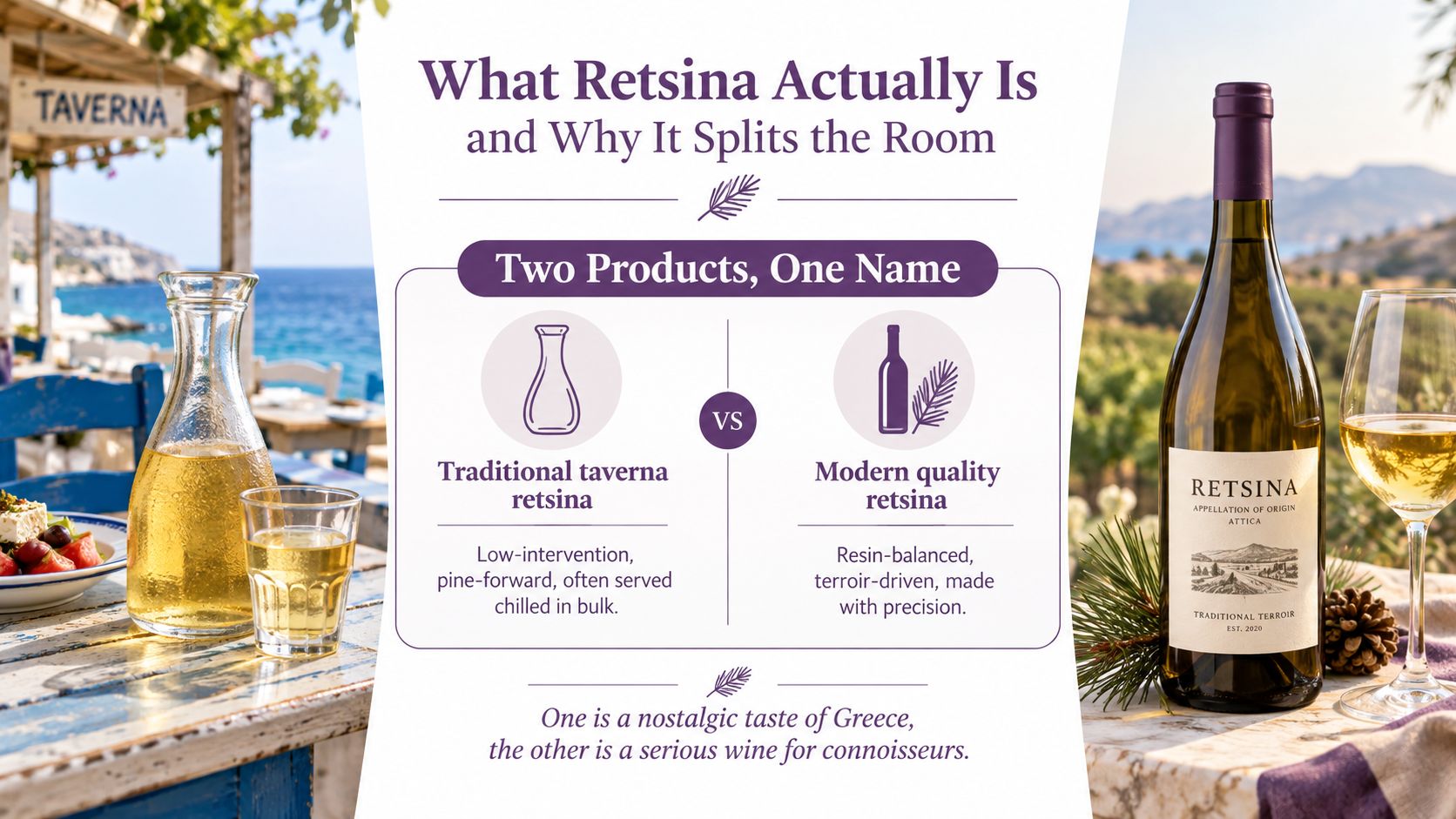
Retsina's reputation is often built on the cheapest glass in a busy taverna. That experience is real, but it does not represent every bottle carrying the name. A chilled carafe beside grilled fish may be pale, herbal, and strongly pine-scented. A carefully made bottle can place resin behind citrus, salt, and textured acidity. Both are retsina, yet price, venue, and format can change what the buyer receives.
The traditional version belongs to an accessible drinking culture. It may arrive in a carafe or small bottle, alongside strongly seasoned food and a crowded table. Its direct resin character suits that setting, where the wine acts like a savory seasoning. The newer quality revival follows a different aim. Producers pay closer attention to grape material, fermentation, resin dosage, and integration, so pine becomes part of the structure rather than the whole message.
Recent coverage places retsina among the Great Greek Wines 2025 selections. A separate 2025 event gave the style a dedicated section with dozens of labels. The same coverage describes an uneven market: some producers still use heavy resin as a marketing hook, while others pursue greater balance. (Great Greek Wines 2025 coverage)
<a id="the-legal-identity-matters"></a>
The legal identity matters
Retsina is not any white wine with a pine-like aroma. EU rules define it through Greek origin, grape must, and treatment with resin from Pinus halepensis, the Aleppo pine. The rules permit resin only for retsina production, making Greece part of the legal identity rather than a decorative reference. (EU regulation on retsina)
That definition also explains why the style feels culturally specific. Resin enters during winemaking, not as a sweet or flavored finish added to an ordinary white. Its effect changes with the must, fermentation, and handling, which helps explain the gap between a forceful taverna pour and a quieter modern bottle.
<a id="why-the-stereotype-persists"></a>
Why the stereotype persists
A consumer survey found that respondents often viewed retsina as mediocre, while showing a preference for bottled versions, particularly in northern Greece. Younger drinkers favored it in traditional tavernas and often consumed it with soft drinks. Many respondents would pay only up to €5 per bottle. (Consumer survey on retsina)
The result is a market split between occasion and aspiration. One bottle may be an inexpensive, nostalgic companion to food. Another may be selected for savory complexity and careful balance. The label alone cannot tell you which experience you are buying.
<a id="how-pine-resin-shapes-the-wine-during-production"></a>
How Pine Resin Shapes the Wine During Production
Retsina's pine character is built during fermentation, not painted onto finished wine. Producers add resin to the grape must before fermentation or while it is underway, giving yeast activity, alcohol, and time a chance to integrate its aromatic compounds. That process helps explain the split market: a brisk, resin-forward taverna pour may feel deliberately rustic, while a carefully made bottle can keep the resin in proportion to the grape and venue.
<a id="a-practical-production-sequence"></a>
A practical production sequence
-
Select the resin. The legally specified botanical is Aleppo pine, or Pinus halepensis. Its quality affects the final aroma, so the resin itself matters alongside the quantity used.
-
Measure the addition. EU rules allow up to 1,000 grams per hectoliter. The resin must be added before fermentation or during fermentation, while the actual alcoholic strength remains above one-third of the total potential alcohol. (EU winemaking rules)
-
Let fermentation integrate it. Yeast is active at this stage. Volatile terpenes and other resin-derived compounds move into the must, creating a fermented wine rather than a white wine with a late flavoring.
-
Control extraction. Temperature, contact time, resin quality, and yeast selection influence the result. Poor control can push the profile toward medicinal, harsh pine; careful handling can leave it fresh and aromatic.
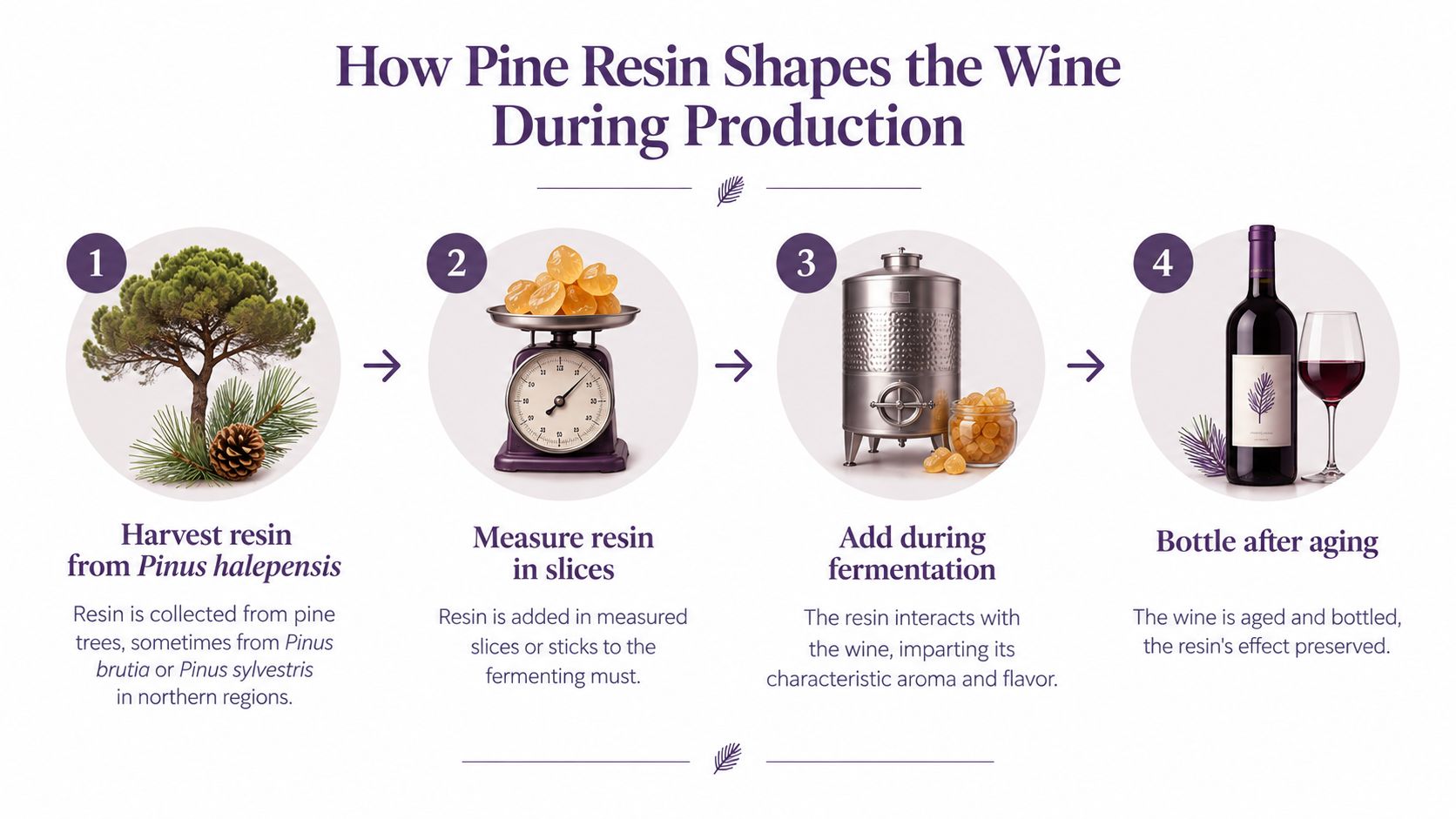
A scholarly summary describes traditional production with a small amount of pine resin, up to 1% of the must, added before or during alcoholic fermentation. It also records a traditional Savatiano and Roditis blend in a 10:1 ratio. Grape composition and resin treatment therefore work as one recipe, not as separate choices. (Scholarly summary of Greek retsina production)
<a id="from-amphora-logic-to-modern-tanks"></a>
From amphora logic to modern tanks
Ancient winemakers used resin to seal porous amphorae and reduce contact with air. Modern producers can control vessels and temperature more precisely, yet the underlying idea remains similar: resin becomes part of the fermentation process. The format and setting still shape the buyer's experience. A low-priced taverna wine may emphasize familiarity and direct pine flavor, whereas a quieter revival style may use the same tradition with greater restraint.
Recent oenological work links resin addition with higher α-pinene, a primary resin aroma marker, and lower concentrations of esters associated with fruity and floral notes. Dosage alone therefore cannot define quality. Yeast strain, fermentation temperature, resin quality, and oak-chip regime can affect oxidation stability, phenolic structure, and aromatic integration. (Oenological study of resin effects)
<iframe width="100%" style="aspect-ratio: 16 / 9;" src="https://www.youtube.com/embed/qS80UXYLbD8" frameborder="0" allow="autoplay; encrypted-media" allowfullscreen></iframe>Production rule: The strongest pine aroma is not automatically the best result. Good retsina lets resin, grape character, freshness, and texture support one another.
<a id="reading-the-aromas-and-palate-of-a-retsina"></a>
Reading the Aromas and Palate of a Retsina
Retsina is easiest to understand as a sequence of sensations, not a simple test of whether the wine tastes like pine. Begin with the resin, then find the grape beneath it, and finish by judging how bitterness, freshness, and texture resolve. This approach also helps separate the two broad experiences buyers may encounter: a direct, pine-forward taverna wine and a quieter bottle where resin sits within the wine rather than defining it.
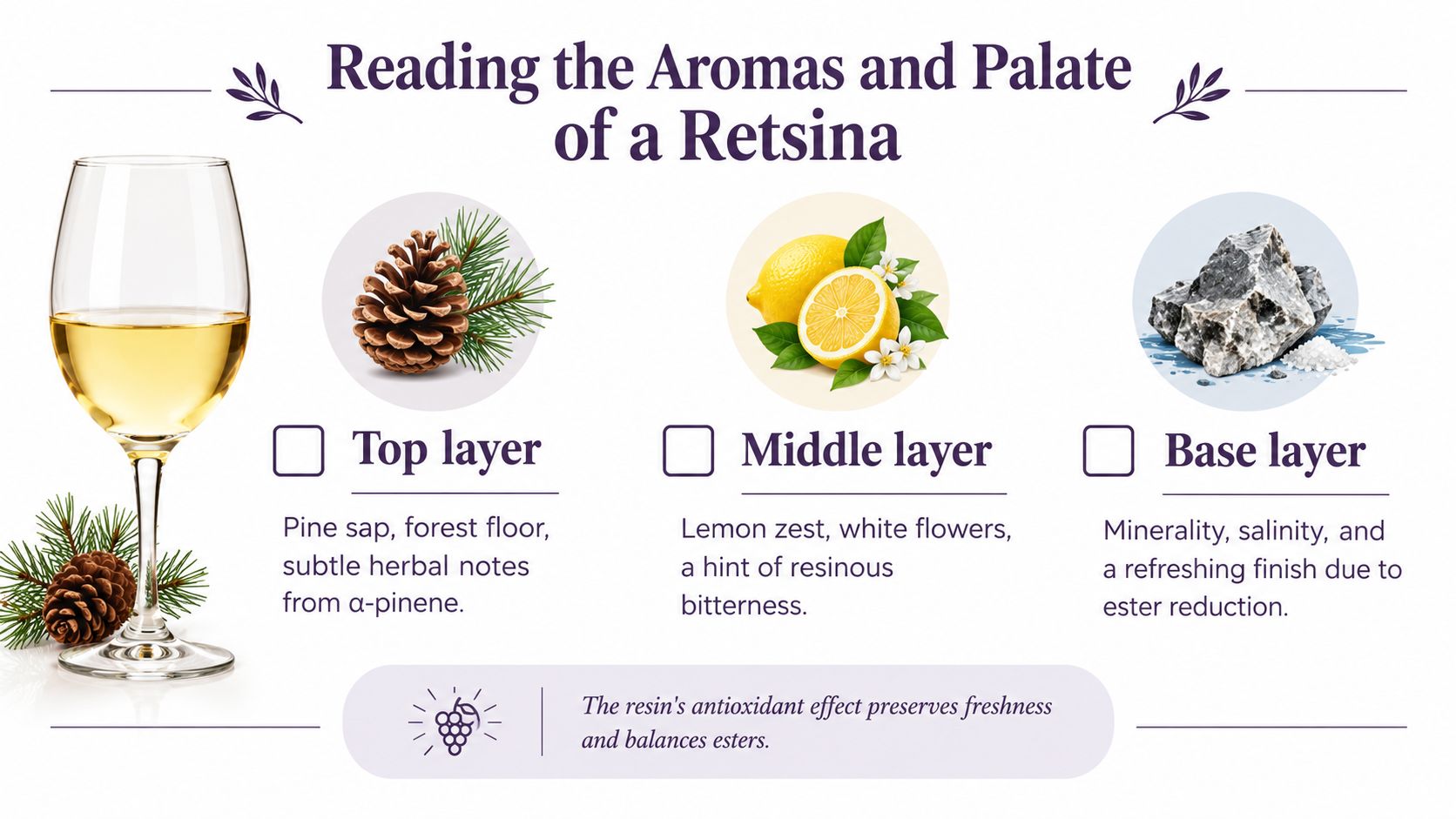
The clearest resin marker is α-pinene, which gives the aroma its conifer-like character. Resin can also suppress some fruity and floral impressions, so apple, pear, or blossom may appear less clearly than they would in an untreated white made from the same grapes. The result depends on the balance of the bottle, not on pine intensity alone.
<a id="three-aroma-layers"></a>
Three aroma layers
- Top layer: Pine sap, dry herbs, and forest-floor scents. In a balanced wine, they feel lifted and Mediterranean rather than abrasive.
- Middle layer: Lemon peel, citrus pith, green apple, white flowers, or stone fruit from the grape base. These notes supply brightness and recognizable fruit.
- Base layer: Mineral, saline, nutty, or lightly oxidative impressions. They often stand out in traditional bottlings with a broader, less polished texture.
On the palate, resin may bring grip, bitterness, and a cooling sensation. A heavily dosed wine can seem almost menthol-like. In a more restrained style, bitterness works as a clean structural accent. Serve the wine too cold and the pine may turn sharp. A little warmth can help fruit, herbs, and resin come together.
Use three questions at the table:
- Aroma weight: Does pine arrive first, or does it share space with citrus and herbs?
- Bitterness length: Does the bitter note disappear cleanly, or linger with a medicinal edge?
- Finish: Does freshness and salinity remain, or does resin take over?
For broader tasting frameworks and wine-analysis terms, see the Wine Labs wine education blog.
<a id="grape-varieties-and-the-styles-they-produce"></a>
Grape Varieties and the Styles They Produce
Retsina is a split market partly because the grape base changes what the resin can do. Savatiano, Roditis, and Assyrtiko create different foundations, so the finished wine may feel broad and herbal, lean and citrus-driven, or firm and mineral.
Savatiano is the familiar high-volume Attica base. Its fuller shape gives resin room to read as a broad, casual taverna style, suited to grilled meats, salads, and simple seafood. This is often the traditional mass-market expression, especially in inexpensive formats or relaxed venues where the wine is poured for refreshment rather than close examination.
Roditis supplies more lift and citrus-pith character. Its leaner texture can make the resin seem fresher and more energetic beside fried fish or lemon-dressed dishes. Bottles built around this grape may feel less weighty, even when the resin remains clearly present.
Assyrtiko changes the frame. Its mineral character and firm acidity place the resin in a tighter structure, particularly in premium bottlings associated with Santorini. The result can feel quieter and more deliberate, with the grape's austerity keeping the botanical note from spreading across the palate. This is the resin-in-balance revival: a style more likely to appear in a considered restaurant setting or a carefully presented bottle than in a large, anonymous pour.
| Grape | Typical Region | Resin Intensity | Acidity / Body | Best Food Match |
|---|---|---|---|---|
| Savatiano | Attica | Broad, classic pine presence | Medium acidity, fuller body | Taverna plates, grilled vegetables, roast chicken |
| Roditis | Central Greece | Fresh resin with more citrus lift | Brighter acidity, leaner texture | Fried calamari, salads, lemony seafood |
| Assyrtiko | Santorini and other premium Greek sites | Resin framed by mineral structure | High-feeling acidity, firm body | Oily fish, shellfish, salty cheeses |
These profiles are guides, not guarantees. Resin dosage, fermentation, price, venue, and bottle format can move the wine away from its expected grape character. Check the producer's description when available, and treat the grape as a starting point rather than a promise.
<a id="serving-retsina-and-pairing-it-with-food"></a>
Serving Retsina and Pairing It With Food
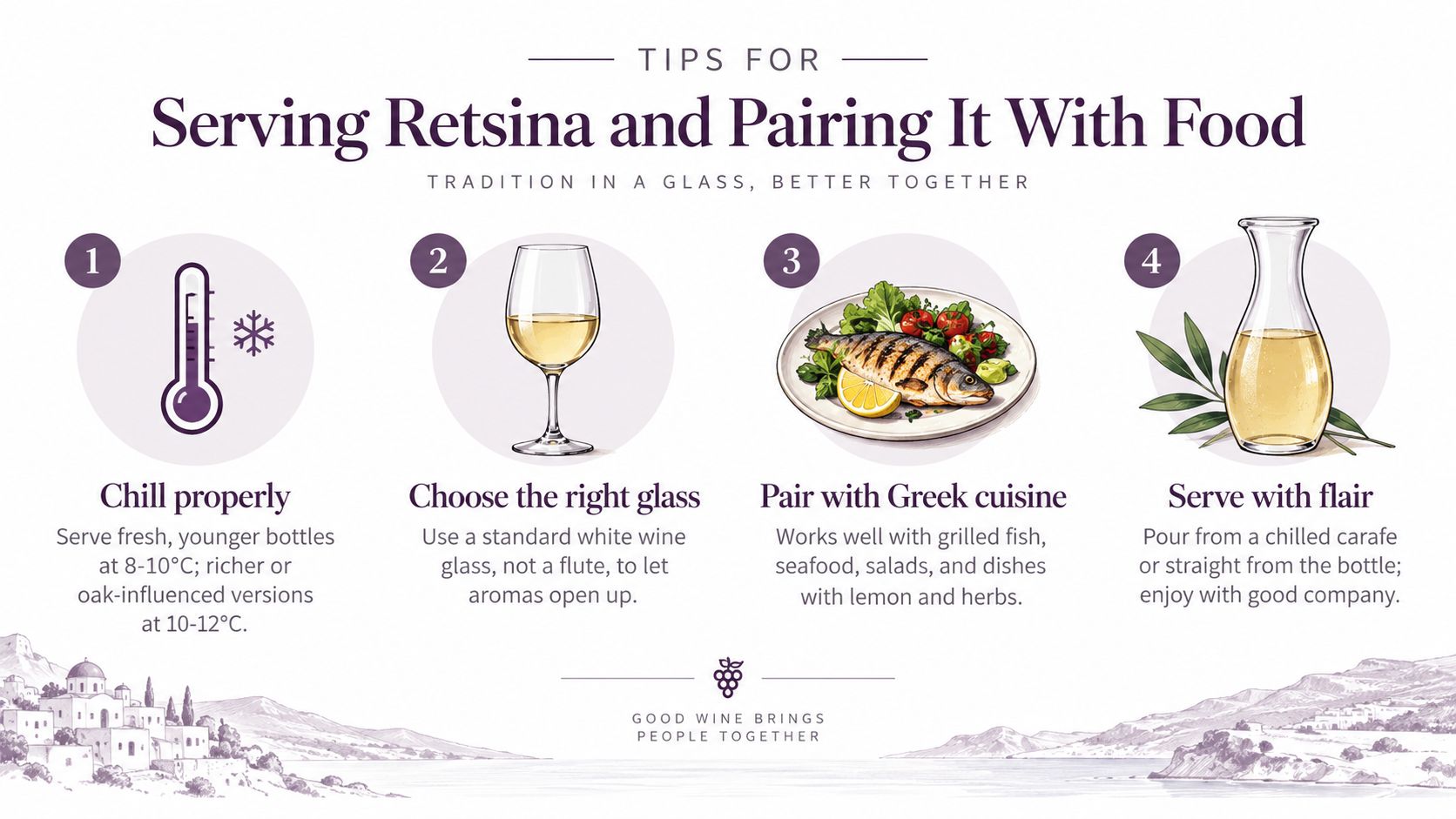
Retsina rewards practical service more than ceremony. Start with temperature, because excessive cold can make the resin feel angular while excessive warmth can exaggerate its herbal intensity.
Serve a fresh, younger bottle around 8 to 10°C. A richer or oak-influenced version can show better at 10 to 12°C, where its texture and fruit have room to emerge. Use a standard white wine glass rather than a flute. The wider bowl gives the resin aromatics enough space to open without turning the pour into a formal tasting exercise.
<a id="build-the-meal-around-contrast"></a>
Build the meal around contrast
Grilled octopus brings char, salinity, and a firm texture. Retsina's herbal edge can connect the grill flavor with lemon and olive oil without making the seafood taste heavy.
Fried calamari is a natural match because the wine's bitterness and acidity refresh the palate after each oily bite. The same logic applies to sardines and mackerel, whose richness benefits from a wine with savory aromatic force.
Fava and horiatiki show another side of the pairing. The wine can echo herbs, tomato, olive, and lemon while adding enough character to avoid disappearing beside raw onion or briny ingredients.
Serving rule: Match the wine to the strongest element on the plate, not just to the main ingredient. Retsina usually performs best when lemon, char, oil, salt, or herbs are active in the dish.
Roast chicken with lemon is a useful non-taverna pairing. The resin note bridges the browned skin and citrus, while a hard sheep's milk cheese can meet the wine's bitterness with salty, savory depth. Pour modestly at first, especially for guests new to the style. A smaller serving gives the wine time to open and lets the table decide whether to continue.
<a id="modern-producers-and-what-they-cost-today"></a>
Modern Producers and What They Cost Today
Retsina becomes easier to shop for once you separate the familiar taverna pour from the quieter revival of resin held in balance. Kechris and Malamatina offer accessible ways into the traditional style, often encountered in casual dining or everyday retail. Gaia Wines and Tetramythos belong to the quality-focused conversation, including estate, organic-leaning, or more carefully defined releases. Small-lot Assyrtiko bottlings associated with Argyros and Santo Wines sit closer to the specialist and collector end.
A producer name is a guide, not a guarantee. The same category can move from a simple, resin-forward wine in a small format to a more composed bottle intended for comparison with other Greek whites. Venue and packaging shape the experience almost as much as the label.
Survey evidence points to modest willingness to pay among many respondents, while newer quality-focused coverage places retsina in curated Greek wine selections and dedicated tasting categories. Those signals describe a split market rather than a single price ladder. Current retail prices, import listings, vintages, and restaurant placements vary by country, so check the exact bottle before treating a producer as a price signal.
| Producer | Market position | Grape base | What to check | Typical route to purchase |
|---|---|---|---|---|
| Kechris | Accessible estate style | Often Savatiano-led | Current vintage and format | Retail or restaurant |
| Malamatina | Traditional accessible style | Broad Greek white profiles | Bottle size and channel | Taverna or retail |
| Gaia Wines | Premium estate expression | Higher-acid Greek varieties may appear | Importer listing and release | Specialist retail or restaurant |
| Tetramythos | Premium or organic-leaning expression | Roditis and other Greek varieties | Certification and current release | Specialist retail or allocation |
| Argyros | Collector-oriented Assyrtiko expression | Assyrtiko | Limited-release status | Specialist importer or retailer |
| Santo Wines | Premium Santorini-linked expression | Assyrtiko | Market and seasonal stock | Specialist retail or restaurant |
Use price as a clue, not a verdict. A low-cost carafe usually signals shared, food-led taverna drinking. A standard bottle with estate details invites closer attention to grape, resin balance, and production choices. Fine wine market data tools can help compare listings across channels, but sensory assessment still decides whether the wine suits the buyer.
<a id="why-retsinas-market-is-a-tale-of-two-tiers"></a>
Why Retsina's Market Is a Tale of Two Tiers
Retsina's reputation comes largely from its cheapest, most familiar occasion, not from the whole category. One side of the market is traditional taverna wine, served for shared, food-led drinking where price, speed, and familiarity matter. The other is a quieter revival, with resin used as part of a more balanced wine rather than as its defining blast. Earlier survey findings describe low willingness to pay and strong taverna associations, while curated selections show continued interest in more refined expressions.
The format often reveals which experience you are buying. A carafe or small bottle usually belongs to communal taverna service. A standard bottle gives the producer more space to show the grape, vineyard, fermentation, and resin choices, and it is more likely to appear in specialist retail or a restaurant list. Neither format guarantees quality. They set different expectations.
<a id="a-buyers-qualitative-price-map"></a>
A buyer's qualitative price map
Price is best read as a clue to positioning, not as a verdict on the wine.
| Tier | Price Signal | Resin Integration | Typical Format | Common Venue |
|---|---|---|---|---|
| Traditional value tier | Low-cost, occasion-led positioning | Pine-forward and direct | Carafe, small bottle, or larger traditional format | Greek taverna |
| Mid-market bottled tier | More attention to packaging and consistency | Resin may be clearer but better integrated | Standard bottle or small format | Retail and casual restaurants |
| Artisanal tier | Specialist positioning and vineyard emphasis | Resin balanced with grape, texture, and freshness | Standard bottle, sometimes limited release | Natural wine bars, specialist retail, fine-dining lists |
The useful question is what the extra money buys. It may reflect provenance, lower-yield fruit, controlled fermentation, organic farming, careful resin selection, or a more polished package. A premium label should show harmony in the glass, not merely a stronger pine aroma. Resin should act like seasoning: noticeable enough to shape the dish, restrained enough to leave the grape visible.
Channel also changes the signal. A low-cost carafe points toward generous table drinking. A carefully presented bottle may invite comparison, conversation, and slower tasting. Buyers tracking listings across retail, auctions, and restaurants can use auction market insights for market context, then judge the wine itself.
Choose the traditional style for a busy table and familiar Greek dishes. Choose a resin-balanced bottle when you want to examine grape character, site, and winemaking. The two tiers meet in the name, but price, venue, and format determine what reaches the glass.
Wine Labs helps merchants, collectors, and wine professionals compare fine-wine prices across retail, auction, exchange, and restaurant channels in one market view. Use Wine Labs to research canonical bottle identities, monitor listings, and make a more informed decision when a retsina or other Greek wine deserves a closer look.