Wine Labs · Market intelligence
7 Best Oregon Wines for Every Serious Buyer
Explore the best oregon wines across Pinot Noir, price tiers, sourcing channels, and producer styles, from benchmark estates to allocation-only bottles.
The popular advice is to start with a prestige ranking and work downward. Serious buyers need a different question: which Oregon Pinot Noir fits the intended drinking moment, sourcing route, and tolerance for scarcity? This roundup compares seven supplied Oregon benchmarks across distinct styles and access models, from broadly distributed estate blends to mailing-list releases. The useful distinctions are vineyard identity, structural profile, aging potential, supplied price context, retail versus direct-to-consumer access, and the trade-off between dependable availability and collector scarcity.
Oregon's reputation rests heavily on Pinot Noir, but the category is more varied than a short list of famous labels suggests. Statewide, Pinot Noir represented 60% of planted acreage and 58% of production in 2024, within a market that sold 5.8 million cases across all channels (2024 Oregon Vineyard and Winery Census coverage). Current price checks should rely on Wine Labs market intelligence alongside producer, newspaper, and other first-party sources, rather than competitor-provider data. For regional context, see this Oregon grape root reference.
Table of Contents
- 1. Domaine Serene ‘Evenstad Reserve' Pinot Noir
- 2. Beaux Frères ‘The Beaux-Frères Vineyard' Pinot Noir
- 3. Cristom ‘Jessie Vineyard' Pinot Noir
- 4. The Eyrie Vineyards ‘Original Vines' Pinot Noir
- 5. Domaine Drouhin Oregon ‘Laurène' Pinot Noir
- 6. Evening Land Vineyards ‘La Source' Seven Springs Vineyard Pinot Noir
- 7. Antica Terra ‘Botanica' Pinot Noir
- Top 7 Oregon Pinot Noirs Comparison
- Choose the Bottle by Access and Style
<a id="1-domaine-serene-evenstad-reserve-pinot-noir"></a>
1. Domaine Serene ‘Evenstad Reserve' Pinot Noir
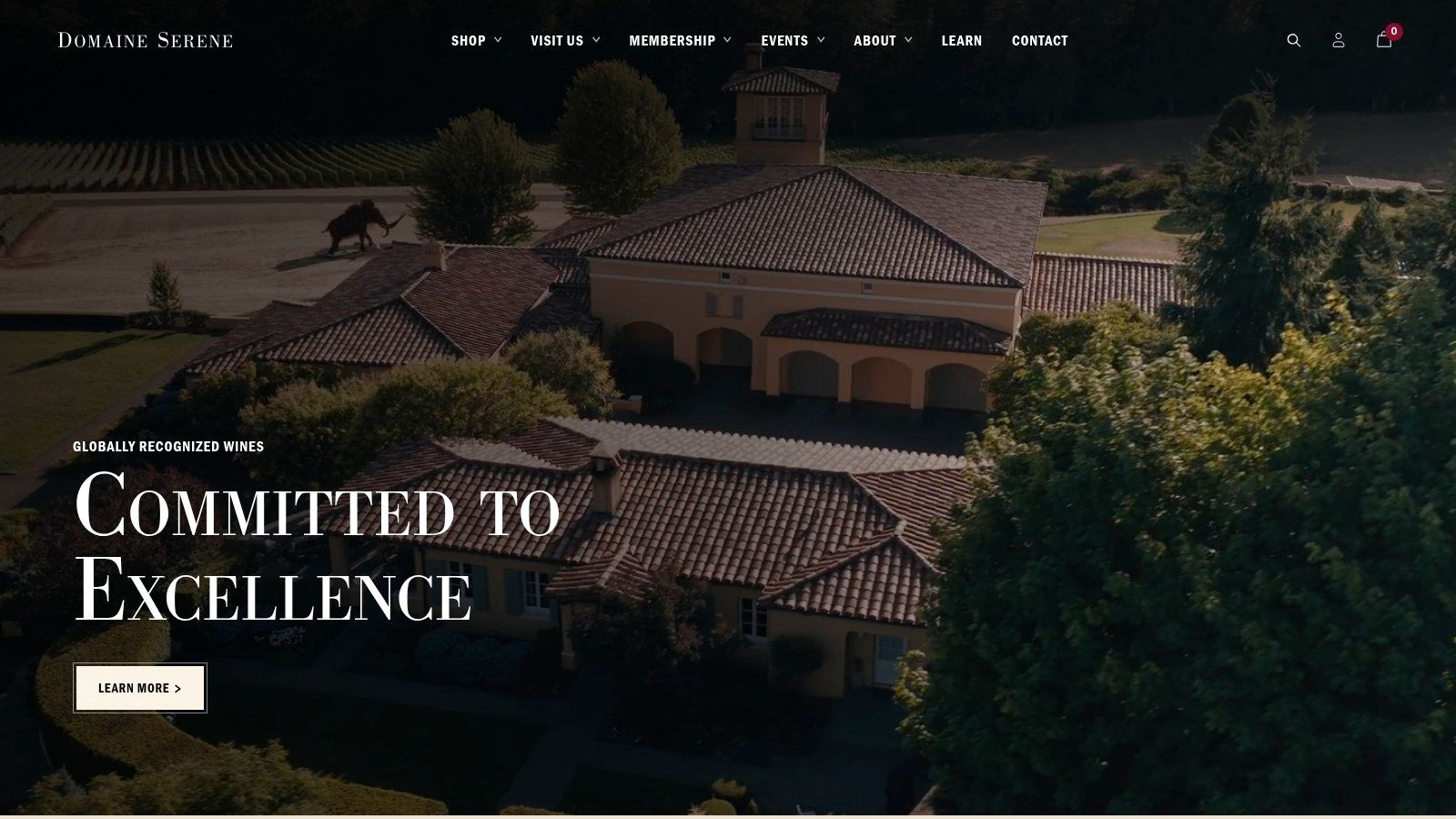
Domaine Serene's Evenstad Reserve is the logical starting point for buyers who want a recognizable Oregon benchmark without making the purchase an allocation hunt. The Dundee Hills flagship is a multi-vineyard estate blend, so its identity comes from the producer's house style as much as from a single parcel. That construction favors polish, proportion, and consistency across vintages.
The wine is built for buyers who want a bottle that can work in several settings. It has the concentration and structure expected from a premium Willamette Valley Pinot Noir, but its broad retail and direct-to-consumer presence makes it easier to replace than the more tightly controlled wines in this list. A 2022 retail snapshot placed it around $94.99, giving buyers a supplied reference point for its premium positioning (Domaine Serene's official site).
<a id="the-buying-profile"></a>
The buying profile
Evenstad Reserve suits a restaurant program, a gift purchase, or a cellar slot where vintage continuity matters. Its long record of 93 to 97 point reviews, as supplied for this comparison, supports its reputation as an ageworthy bottling, though buyers should still assess the specific vintage and storage history rather than treating the label as a guarantee.
The main drawback is stylistic. Oak can feel prominent in youth, and the price asks buyers to pay for brand recognition, distribution, and a polished estate blend rather than narrowly defined site expression.
Practical rule: Choose Evenstad Reserve when sourcing reliability matters almost as much as vineyard character.
<a id="2-beaux-freres-the-beaux-freres-vineyard-pinot-noir"></a>
2. Beaux Frères ‘The Beaux-Frères Vineyard' Pinot Noir
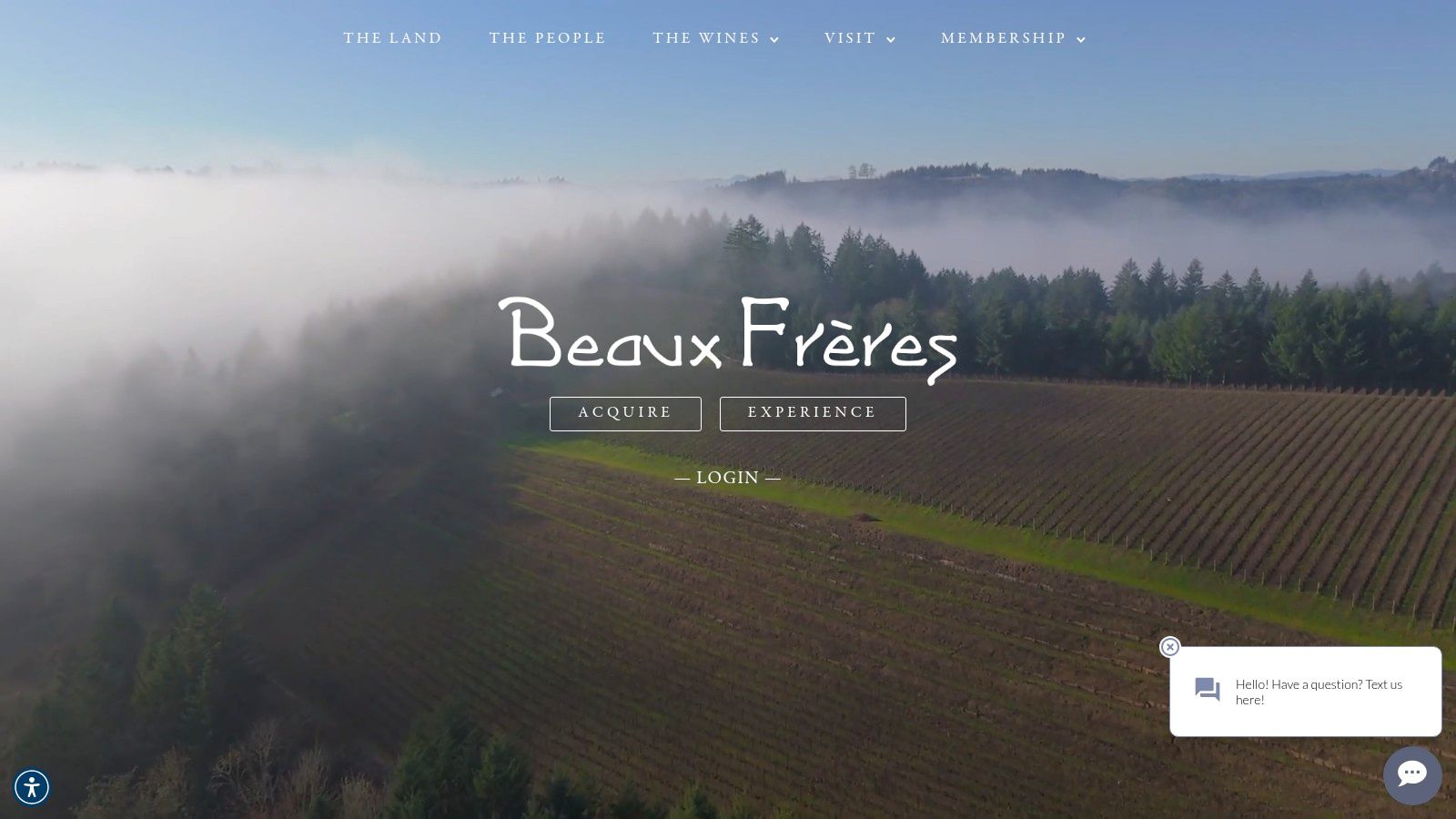
Beaux Frères takes the opposite route from a broadly available estate blend. The Beaux-Frères Vineyard is a single-vineyard bottling from the original Ribbon Ridge site, an estate whose dry-farmed identity gives the wine a strong sense of provenance. The style is deep and perfumed, with whole-cluster-friendly production choices contributing aromatic lift, spice, and structural complexity.
This is the bottle for a buyer who wants the vineyard name to do real work. The wine's appeal isn't that it carries a famous producer label. It offers a direct connection to a particular site and a distinctive estate tradition, which helps explain why collectors, sommeliers, and premium restaurant buyers seek it out. Learn more through Beaux Frères.
<a id="scarcity-changes-the-comparison"></a>
Scarcity changes the comparison
Supply is allocation-focused, with periodic retail placements rather than dependable open-market access. That makes the purchasing process part of the wine's value proposition, but it also makes price comparisons less straightforward. A restaurant list may be easier to access than a retail shelf, while a direct relationship with the winery may matter more than a broad search.
The wine's depth gives it clear cellar logic, especially for buyers who prefer structured Pinot Noir over immediate softness. Its premium pricing, however, reflects limited production and demand as well as liquid quality. Buyers should compare release status, seller reputation, and provenance before paying a scarcity premium.
For broader market context, Wine Labs' Oregon Pinot Noir news digest can help place availability changes beside other market signals.
<a id="3-cristom-jessie-vineyard-pinot-noir"></a>
3. Cristom ‘Jessie Vineyard' Pinot Noir
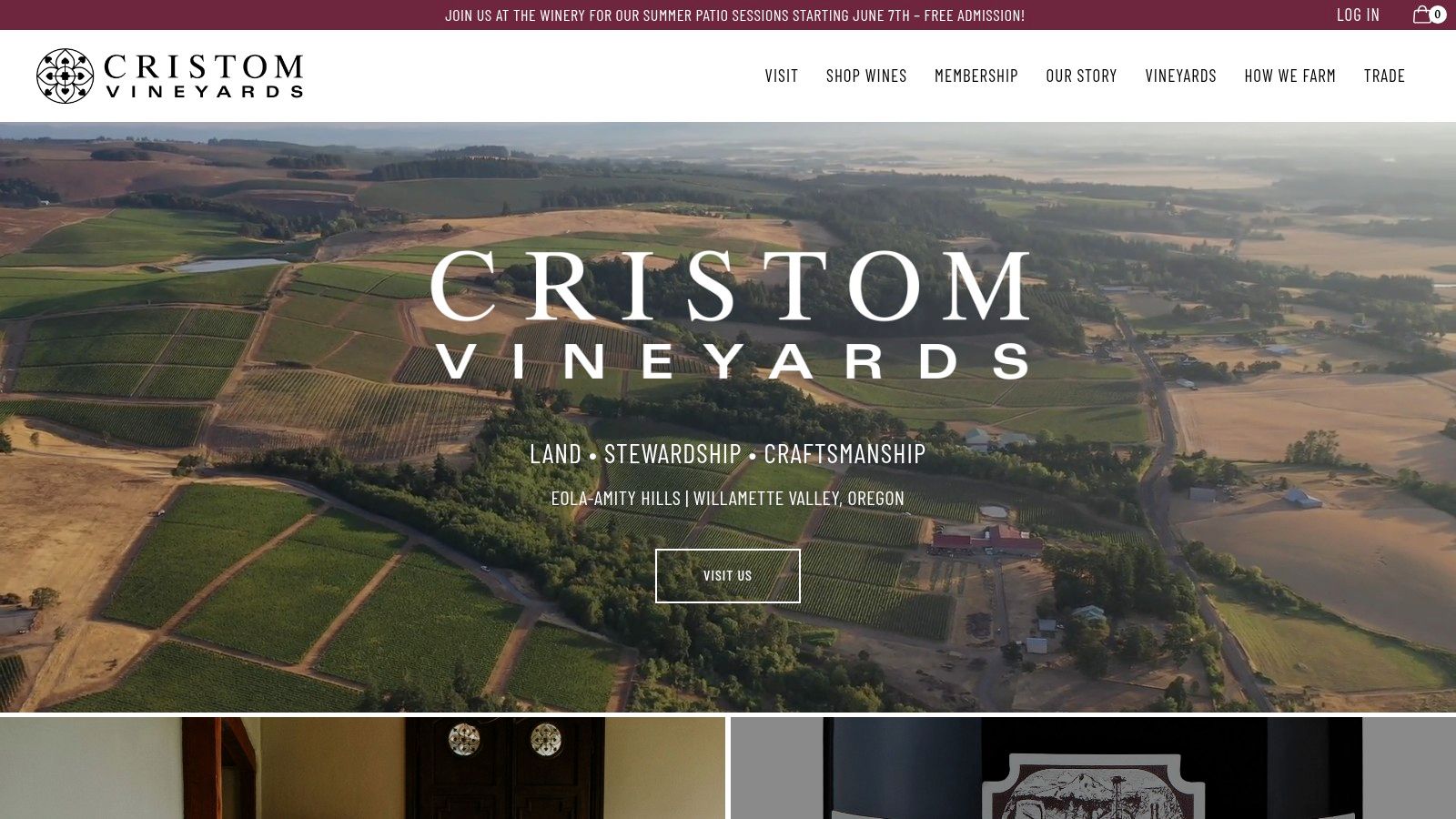
Cristom's Jessie Vineyard is an insider's choice for buyers who value structure without sacrificing aromatic detail. The wine comes from a steep, volcanic, east-facing estate site in the Eola-Amity Hills, and the vineyard's elevation and orientation give the bottling a clear geographic argument. Rather than relying on broad brand familiarity, Jessie Vineyard earns attention through site transparency.
Whole-cluster fermentation is central to the wine's profile. It brings spice, tension, and shape, making the bottling more compelling for a buyer thinking about development over time than for someone searching only for plush fruit at release. A 2022 retail listing near $79.99 places it firmly in the premium tier while keeping it below the supplied reference for Evenstad Reserve (Cristom Vineyards).
<a id="buy-it-for-development"></a>
Buy it for development
Jessie Vineyard often needs time in bottle or a careful decant when young. That isn't a flaw, but it changes the use case. A buyer opening it immediately should plan around its structure, while a collector can treat that same structure as evidence of longer-term potential.
Retail availability generally parallels direct-to-consumer supply, which gives Cristom an advantage over allocation-only producers. It's still a site-specific wine, but the buyer doesn't have to choose between provenance and practical access as sharply.
The distinction matters because Oregon's Pinot Noir sector is large enough to support both broad distribution and highly individualized vineyard bottlings. The 2024 census counted 1,537 planted vineyards and 47,343 planted acres, evidence of a production base where site-led comparison is more useful than treating Oregon Pinot Noir as one uniform style (Wine Business coverage of the census).
For related market signals, consult the Wine Labs Oregon Pinot Noir milestone digest.
<a id="4-the-eyrie-vineyards-original-vines-pinot-noir"></a>
4. The Eyrie Vineyards ‘Original Vines' Pinot Noir
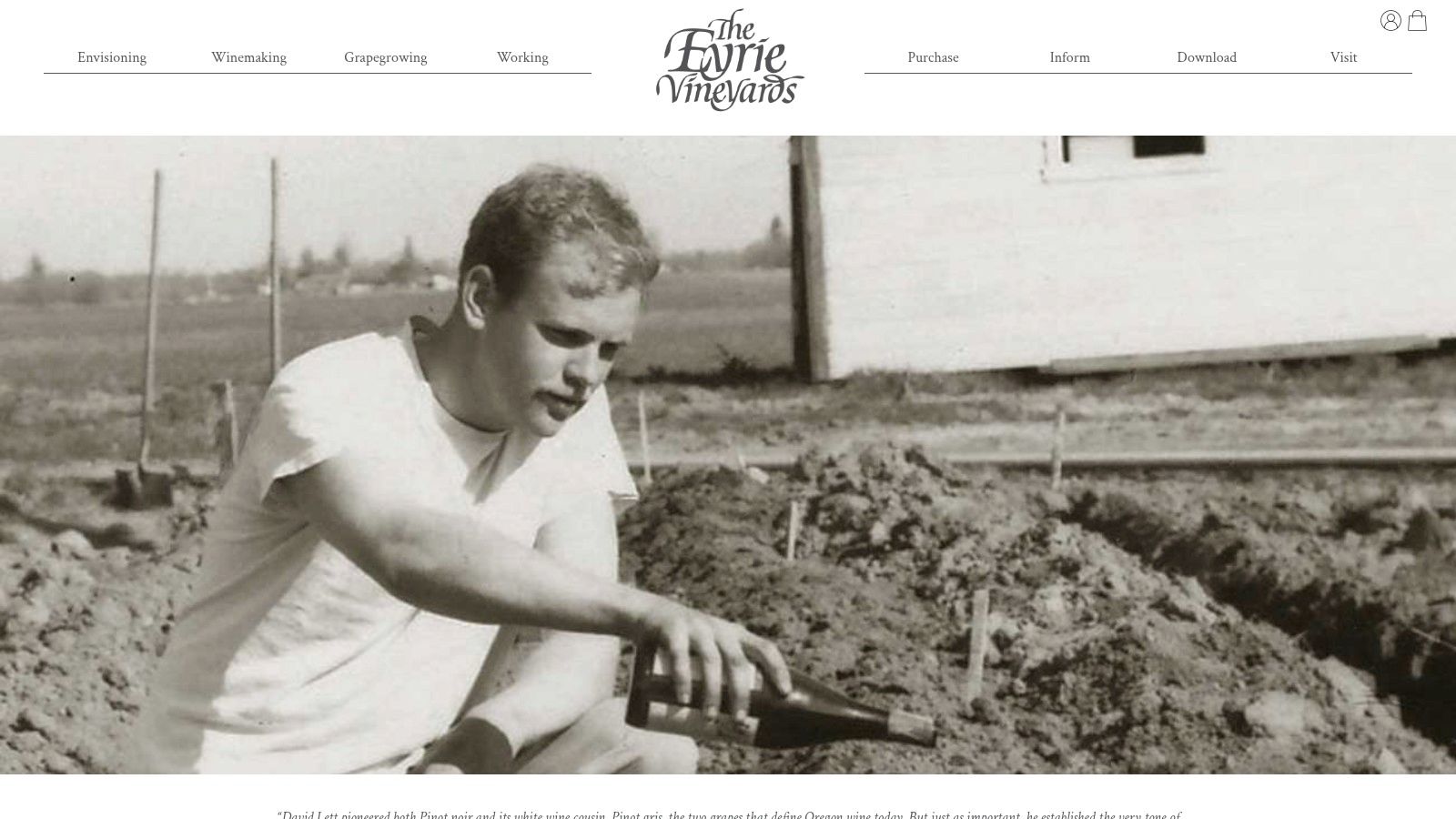
The Eyrie Vineyards' Original Vines Pinot Noir is the clearest choice for buyers who prefer historic provenance and restraint over immediate power. It comes from the original own-rooted plantings established by David and Diana Lett in the Dundee Hills. That origin gives the wine a meaningfully different role in a cellar. It represents a foundational Oregon style, not just another premium bottling from a celebrated estate.
The wine is organically farmed and deliberately low-extraction in character. Expect lighter color and a more elegant frame than the richer, oak-marked, or more concentrated examples elsewhere in this group. That restraint can be highly rewarding with food and age, but it won't satisfy every buyer looking for a forceful, fruit-forward Pinot Noir.
<a id="provenance-is-the-point"></a>
Provenance is the point
Eyrie's museum cellar and long history strengthen the case for collectors who value continuity. Specialist retailers and winery club or library releases are common sourcing routes, and limited allocations can sell through quickly. The buyer's challenge isn't only finding a bottle. It's finding one with a credible vintage, storage, and release history.
The right question isn't whether Original Vines looks as dark or powerful as another Oregon Pinot. It's whether you want a bottle that preserves the region's classic, lifted side.
The Willamette Valley itself is a broad umbrella AVA, covering 3,438,000 acres, with 27,202 planted acres in the cited overview and ten nested AVAs (Willamette Valley AVA overview). Eyrie's value comes from how specifically its history and planting material narrow that vast regional identity into one recognizable expression.
<a id="5-domaine-drouhin-oregon-laurene-pinot-noir"></a>
5. Domaine Drouhin Oregon ‘Laurène' Pinot Noir
Domaine Drouhin Oregon's Laurène is the strongest fit for a buyer who wants high-end Willamette Valley Pinot Noir with dependable sourcing. It's the flagship barrel selection from the Dundee Hills estate, made with a finesse-first approach and a clear French family pedigree. The wine feels designed for precision and proportion rather than spectacle.
That positioning gives Laurène unusual utility. It can serve a serious home cellar, a restaurant list, or a buyer who needs repeatable access through direct-to-consumer and three-tier channels. The supplied reference for the 2023 Laurène was about $80 through Domaine Drouhin Oregon shop links, a useful price context for its place in the premium category (Domaine Drouhin Oregon).
<a id="a-dependable-premium-choice"></a>
A dependable premium choice
Laurène is more restrained than some richer Willamette Valley peers, which makes it especially suitable for meals and for buyers who prefer finesse. Its vintage transparency also helps the buyer read the year rather than encounter an aggressively standardized profile.
The trade-off is scarcity. Unlike a micro-cuvée with a waitlist narrative, Laurène doesn't depend on limited access to justify its appeal. That may reduce its collector mystique, but it improves the practical buying experience. A restaurant or retailer can plan around it more easily, and a private buyer has a better chance of replacing a successful vintage.
Oregon's broader sector supports this kind of purchase. State materials reported 1,110-plus wineries, 610-plus estate vineyards, and roughly 1,470 wine grape growers, showing how the region has developed a substantial but premium-focused production system (Oregon wine industry presentation).
For current industry and hospitality context, see the Wine Labs Oregon vineyard acquisitions digest.
<a id="6-evening-land-vineyards-la-source-seven-springs-vineyard-pinot-noir"></a>
6. Evening Land Vineyards ‘La Source' Seven Springs Vineyard Pinot Noir
Evening Land's La Source offers one of the clearest ways to buy into a site-driven hierarchy without jumping straight to the most scarce bottling. It comes from a single block within the Seven Springs Vineyard in the Eola-Amity Hills, and its savory, mineral-led character distinguishes it from softer, more overtly fruit-centered Oregon Pinot Noirs.
The producer's tiered lineup is a practical advantage. The relationship among Seven Springs, La Source, and Summum helps buyers understand where this bottle sits within the estate rather than forcing them to decode an isolated label. That transparency makes La Source easier to evaluate for both collectors and merchants.
<a id="the-value-of-a-clear-tier"></a>
The value of a clear tier
DTC pricing snapshots placed La Source near $80, giving it a supplied reference point alongside Cristom Jessie Vineyard and Domaine Drouhin Laurène. That comparison reveals a useful distinction. Similar pricing doesn't mean identical value. Cristom emphasizes whole-cluster spice and site structure, Drouhin emphasizes refined accessibility, while La Source emphasizes savory precision and volcanic drive.
Some vintages need bottle time to unwind. Smaller production than the entry blends also means particular tiers can sell out, but transparent DTC availability makes the sourcing process more legible than a pure mailing-list model.
The Columbia Gorge provides a useful reminder that Oregon isn't stylistically confined to the Willamette Valley. Its AVA spans 179,200 acres across Oregon and Washington, with approximately 1,300 planted acres among more than 90 vineyards as of 2023 (Columbia Gorge AVA overview). La Source belongs to a different appellation, and buyers should treat Oregon provenance as a regional variable rather than a single quality shorthand.
<a id="7-antica-terra-botanica-pinot-noir"></a>
7. Antica Terra ‘Botanica' Pinot Noir
Antica Terra's Botanica is for the buyer who sees access as part of the purchase. This is a micro-production Pinot Noir from Maggie Harrison's estate, made with meticulous élevage and a concentrated yet lifted house signature. Its distinctive aromatics and strong restaurant and collector presence give it a cult position among premium Oregon wines.
The release model is central to the experience. Botanica is primarily accessed through mailing-list or Reserve membership channels, with select restaurant placements providing another route. The winery's comparative tastings and reserved-release workflows reinforce a relationship-led model, where knowing the producer and monitoring release windows matters more than searching a broad retail network (Antica Terra).
<a id="scarcity-requires-discipline"></a>
Scarcity requires discipline
Allocation-led buying creates both appeal and uncertainty. Availability and pricing can be opaque, while secondary and on-premise prices may reach large multiples of release pricing. That makes the wine collectible, but it also raises the risk of paying for access rather than evaluating the bottle on its own terms.
Buyers should separate three questions: whether they want Botanica's style, whether they want its provenance, and whether they're comfortable with the release process. A collector who values distinctive, difficult-to-source wines may accept the trade-off. A restaurant or retailer that needs reliable replenishment probably won't.
Oregon's production profile helps explain why both models coexist. The state accounted for only about 1.5% of U.S. wine production, yet state materials reported more than $7.2 billion in annual economic activity, reflecting a sector that has built value through premium positioning rather than volume (Oregon wine industry presentation).
<a id="top-7-oregon-pinot-noirs-comparison"></a>
Top 7 Oregon Pinot Noirs Comparison
| Wine | Production / Complexity 🔄 | Cost & Access ⚡ | Quality & Ageability ⭐ | Ideal Use Cases 💡 | Key Advantages 📊 |
|---|---|---|---|---|---|
| Domaine Serene ‘Evenstad Reserve' Pinot Noir | Multi-vineyard estate blend; standardized vinification for house consistency | Premium (~$95); broad U.S. retail & DTC distribution, widely stocked | High (93–97pts); structured and ageworthy | Restaurant/retail programs, cellar pick for consistent performance | Reliable quality across vintages; easy to source |
| Beaux Frères ‘The Beaux‑Frères Vineyard' Pinot Noir | Single‑vineyard, dry‑farmed; limited-production, whole‑cluster–friendly approach | High price; allocation/DTC focus; scarce on open market | Top-tier quality; pronounced site character and cellaring potential | Collector allocations, high-end restaurant lists, tastings | Distinct site expression; strong critic and trade demand |
| Cristom ‘Jessie Vineyard' Pinot Noir | Single‑vineyard high‑elevation site; whole‑cluster fermentation for spice/structure | Premium (~$80); regular retail availability alongside DTC | Serious structure; consistent terroir expression; cellar-worthy | Cellaring, sommelier-driven lists, precision tastings | Transparent terroir and vintage consistency |
| The Eyrie Vineyards ‘Original Vines' Pinot Noir | Own‑rooted historic plantings; organic farming and restrained, low‑extraction style | Limited allocations; specialist retailers, winery club/library releases | Elegant, classic profile with proven longevity | Collectors, museum/library releases, historic-value lists | Exceptional provenance and benchmark old‑school style |
| Domaine Drouhin Oregon ‘Laurène' Pinot Noir | Estate barrel selection with Burgundian influence; finesse-focused élevage | Mid‑premium (~$80); reliable supply across DTC and three‑tier channels | Finesse-driven and ageworthy; consistent vintage transparency | By‑the‑glass programs, restaurant lists, approachable cellars | Strong quality-to-price ratio; easy to program on lists |
| Evening Land ‘La Source' (Seven Springs Vineyard) Pinot Noir | Single‑block selection within a tiered estate lineup; focused, site-driven winemaking | Mid‑premium (~$80); transparent DTC pricing and regular availability | Savory, mineral‑driven; benefits from bottle time in some vintages | DTC buyers, tiered estate collectors, value-focused premium lists | Site purity with clear tiered value steps |
| Antica Terra ‘Botanica' Pinot Noir | Micro‑production with meticulous élevage; allocation‑only release model | Very limited; mailing list/reserve membership primary access; high secondary premiums | Highly concentrated, collectible, long‑lived | Blue‑chip collectors, elite restaurant lists, special releases | Distinctive house signature and cult collector demand |
<a id="choose-the-bottle-by-access-and-style"></a>
Choose the Bottle by Access and Style
The best Oregon wines aren't interchangeable trophies. They solve different buying problems. If you need a bottle that can be sourced repeatedly for a retail, restaurant, or home program, start with Domaine Serene Evenstad Reserve or Domaine Drouhin Oregon Laurène. Evenstad Reserve brings a polished, recognizable estate-blend profile and broad distribution. Laurène offers a more restrained, finesse-led style with similarly practical access and a supplied price context near the premium sweet spot.
Choose Cristom Jessie Vineyard or Evening Land La Source when vineyard identity and structure matter more than maximum availability. Jessie Vineyard is the more explicitly whole-cluster-driven, spicy, cellar-oriented choice. La Source offers savory mineral detail and the advantage of a clearly tiered estate lineup. Both are better suited to buyers who enjoy following a wine's development rather than opening it solely for immediate fruit.
The Eyrie Vineyards Original Vines belongs in a different category. It's the choice for historic provenance, own-rooted plantings, organic farming, and classic Willamette Valley restraint. Its lighter color and lower-extraction style should be treated as deliberate virtues, not signs that it's competing with a more powerful Pinot Noir.
For Ribbon Ridge depth and a single-vineyard collector identity, choose Beaux Frères The Beaux-Frères Vineyard. Its allocation-focused supply means the sourcing process can be part of the commitment. Choose Antica Terra Botanica when the objective is allocation-led collecting, distinctive house style, and access through mailing-list or reserve relationships rather than open retail distribution.
Before buying, compare current listings across retail, DTC, restaurant, and secondary channels. Wine Labs can help normalize producer, cuvée, vintage, and format identities while placing observed offers in broader market context. That matters particularly for scarce wines, where an apparent bargain may reflect a different bottle size, release status, condition, or seller profile.
Verify the vintage, format, condition, seller, and release status before committing. Those details can matter more than a reputation score when you're comparing a widely distributed estate blend with an allocation-only single-vineyard or micro-production bottling.
Wine Labs consolidates fine-wine pricing across retail, auction, exchange, and restaurant channels, helping buyers compare Oregon Pinot Noir offers by canonical identity, vintage, format, and market context. Use Wine Labs to investigate current listings, monitor price movement, and make a more informed sourcing decision before you buy.