Wine Labs · Market intelligence
White Burgundy Wine: Terroir, Pricing and Market Trends
Explore white burgundy wine from Chablis to Mâcon. Discover appellation tiers, terroir impacts, aging science, and current fine wine market pricing trends.
White wine trading value on Liv-ex rose 650% from 2010 to 2025, a shift that places white Burgundy wine at the centre of fine-wine market analysis rather than at its traditional edge. Liv-ex market data reported by Vinetur also records Burgundy at 69.3% of white-wine trading by value in 2026. The figures point to a category where terroir, cellar practice, scarcity and price discovery now interact directly.
White Burgundy is dry white wine from Burgundy, France, made almost entirely from Chardonnay. The category spans a fragmented region, from Chablis in the north to Fuissé in the south, a distance of more than 200 kilometres according to WineCap's guide to white Burgundy appellations and ageing. That distance matters commercially. A bottle labelled Chablis, Meursault or Pouilly-Fuissé belongs to the same broad family, but its soil, classification and production context can imply a very different sensory profile and valuation logic.
Table of Contents
- The Rise of White Burgundy in Fine Wine Markets
- Terroir and Geography from Chablis to Mâcon
- Decoding the Appellation Hierarchy
- Winemaking Science and Aging Trajectories
- Market Liquidity and Pricing Dynamics
- Navigating Fragmented Pricing Channels
- Strategic Sourcing and Portfolio Valuation
<a id="the-rise-of-white-burgundy-in-fine-wine-markets"></a>
The Rise of White Burgundy in Fine Wine Markets
Chardonnay covers 51% of Burgundy's vineyard surface, while white wine accounts for 60% of the region's production, according to Decanter's overview of white Burgundy. Those figures establish white Burgundy as a core agricultural and commercial product, not a minor counterpart to the region's red wines.
Its market structure is more fragmented than the headline category suggests. Regional, village, Premier Cru and Grand Cru designations divide production into distinct pricing tiers. Producers may work across small parcels, several appellations and separate climats, so buyers must evaluate the exact wine rather than apply one regional price. Producer reputation, vineyard, vintage, bottle format and storage history all affect valuation.
<a id="from-regional-identity-to-tradable-category"></a>
From regional identity to tradable category
Trading activity reflects this growing precision. Liv-ex reported a 650% increase in the value of white wine traded on its exchange between 2010 and 2025. The same Vinetur report also recorded Burgundy at 69.3% of white-wine trading by value in 2026. The figures show that white Burgundy now occupies a significant position in fine-wine capital markets, although liquidity remains concentrated in bottles that buyers can identify, authenticate and resell with confidence.
This distinction matters to merchants. An acclaimed appellation does not by itself guarantee efficient price discovery. The tradable asset is a specific wine identity, defined by producer, appellation, vintage, format and condition. Classification and provenance explain why two bottles from the same broad regional category can command very different prices and attract different levels of secondary-market demand.
Market reading: As white Burgundy expands commercially, precise identification becomes more valuable. Fragmentation makes generic regional pricing a weak guide to liquidity.
<a id="liquidity-doesnt-remove-sensitivity"></a>
Liquidity doesn't remove sensitivity
iDealwine reported moving just over 30,000 bottles of white Burgundy in 2025, up 13% year on year, while average hammer prices fell from €213 to €193. The same report presents the result as a warning for valuation: higher turnover can coexist with softer average prices.
Volume and price direction therefore require joint analysis. A category may attract buyers and generate auction activity while individual lots undergo correction. Collectors should separate structural demand from the price paid for a particular bottle. Merchants should track realised prices, not only asking prices, when sourcing across fragmented channels. That discipline links Burgundy's traditional hierarchy to modern investment liquidity, where soil, classification and cellar history influence not only style, but also the ease and price of resale.
<a id="terroir-and-geography-from-chablis-to-macon"></a>
Terroir and Geography from Chablis to Mâcon
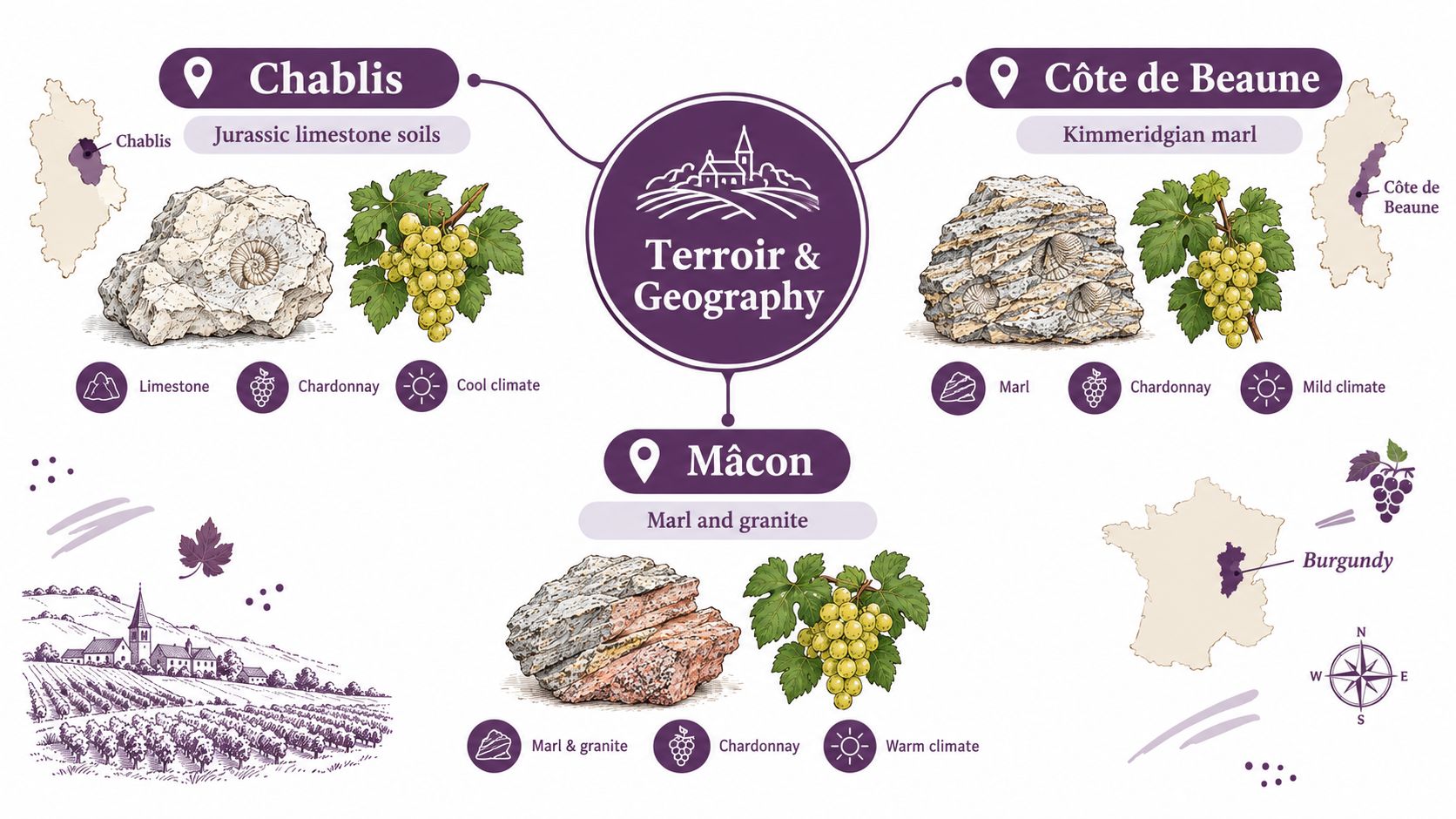
White Burgundy covers more than 200 kilometres from Chablis to Fuissé, a north-to-south range that places Chardonnay in contrasting geological and climatic conditions. WineCap's regional guide uses this span to show why white Burgundy represents a family of styles rather than one fixed flavour profile. For valuation, geography matters because soil and climate influence structure, ageing potential and the price tier a wine can credibly occupy.
<a id="limestone-marl-and-the-shape-of-the-palate"></a>
Limestone, marl and the shape of the palate
Limestone- and marl-rich soils are associated with Chardonnay sites including Chablis, Puligny-Montrachet and Meursault. Calcium-rich strata can support natural acidity and a more structured, mineral profile. In tasting terms, that often produces a taut, linear shape, with the underlying structure supporting longer cellaring. Wines with this profile may attract buyers seeking age-worthy bottles, although producer reputation and provenance still determine liquidity.
Clay-limestone soils generally contribute greater breadth and a creamier impression. They can age well, but their balance depends more visibly on fruit concentration, lees work and oak management. A comparison between two Côte de Beaune bottlings should therefore consider whether the site points towards an acid-driven architecture or a fuller palate requiring careful élevage.
| Terroir signal | Likely analytical use |
|---|---|
| Calcium-rich limestone | Look for tension, linearity and structural persistence |
| Limestone and marl | Expect a mineral framework with potential for extended development |
| Clay-limestone soils | Anticipate broader texture and a creamier impression |
These relationships indicate tendencies, not guarantees. Vintage conditions and producer decisions can alter the final wine substantially. Terroir works best as a valuation filter: it helps identify likely style and ageing behaviour, while producer-level research confirms whether those qualities are expressed consistently enough to support resale demand.
<a id="reading-the-route-from-north-to-south"></a>
Reading the route from north to south
Chablis provides the clearest limestone-led reference point. Its northern position and calcium-rich geological context help explain the association with freshness, precision and a more acid-driven profile. Farther south, the Côte de Beaune offers structured Chardonnay from sites such as Puligny-Montrachet and Meursault. Soil, exposure and élevage together determine whether those wines feel incisive or expansive, and that distinction can affect both collector preference and sourcing risk.
The Mâconnais extends the range towards more generous expressions, while marl and limestone can preserve shape and freshness. This creates a practical sourcing point for collectors. A wine does not require the most famous name to offer useful structural qualities. Its investment case depends on the coherence between site, producer, vintage condition and intended drinking horizon.
For comparison with calcareous vineyards outside Burgundy, Cobham House Vineyard's explanation of chalk terroir provides context on how chalk soils can shape vineyard interpretation.
A visual introduction to Burgundy's white-wine region can also help connect geology with place:
<iframe width="100%" style="aspect-ratio: 16 / 9;" src="https://www.youtube.com/embed/B3d-62pJFwI" frameborder="0" allow="autoplay; encrypted-media" allowfullscreen></iframe><a id="decoding-the-appellation-hierarchy"></a>
Decoding the Appellation Hierarchy
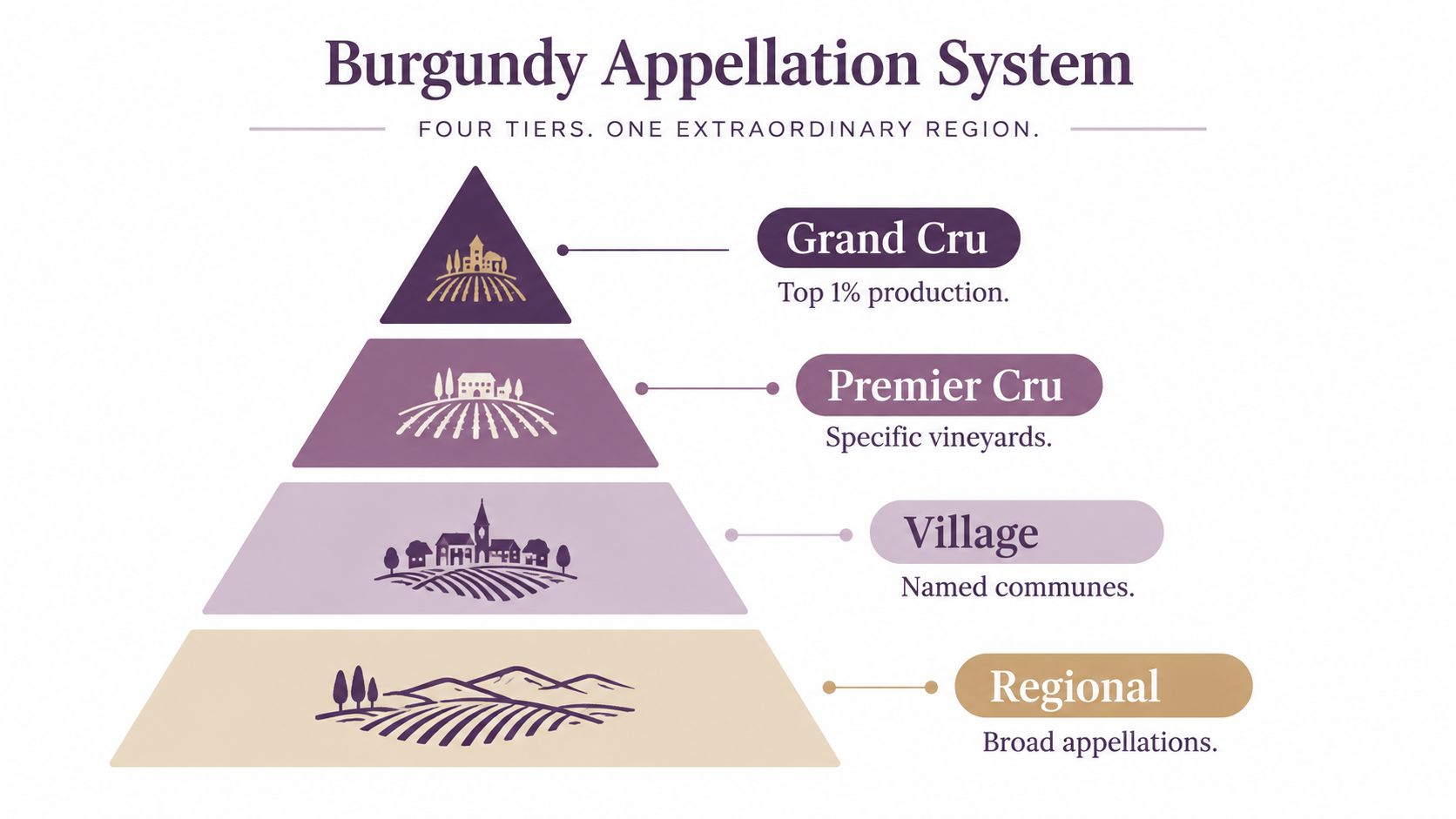
Burgundy's appellation hierarchy is both a legal classification and a market-pricing framework. The four levels are regional, village or communal, Premier Cru and Grand Cru, as outlined by Jeroboams' introduction to white Burgundy. Each level narrows the bottle's geographic claim. That narrower claim can support higher pricing, but producer reputation, parcel quality and provenance determine whether the premium converts into reliable resale demand.
<a id="start-with-the-label-level"></a>
Start with the label level
Regional appellations make the broadest geographic claim. Bourgogne Blanc and Mâcon Blanc provide accessible entry points to Burgundy Chardonnay, yet their labels reveal less about the specific site than a named village or climat. Soil origin and blending choices therefore become more important when comparing bottles within this tier.
Village or communal wines identify a defined commune. Meursault, Chablis and Pouilly-Fuissé are examples listed in the Jeroboams guide. The village name supplies a clearer geographic and stylistic reference, although producer, vineyard position and parcel selection still influence quality and marketability.
Premier Cru wines come from designated sites within a village. Their labels combine the commune with the Premier Cru climat, giving buyers a more precise site signal than a village designation alone. For collectors, this tier can offer a useful balance between identifiable terroir, relative availability and acquisition cost.
Grand Cru wines occupy the narrowest and most prestigious classification. White Burgundy is produced in 10 of Burgundy's 33 Grand Cru appellations, while white wine appears in 34 of the region's 44 village-level appellations, according to Decanter's classification overview. The restricted supply supports scarcity, but liquidity still depends on producer recognition, bottle condition and provenance.
<a id="why-classification-changes-valuation"></a>
Why classification changes valuation
Classification establishes a starting point for comparison, not a complete valuation model. A village wine from a sought-after domaine can command stronger demand than a weak bottling from a higher tier. Buyers should assess the formal designation alongside the wine's soil context, élevage decisions, vintage and distribution history.
A practical label audit should record:
- Appellation tier: Separate regional, village, Premier Cru and Grand Cru wines.
- Exact place name: Capture the commune and climat where applicable.
- Producer identity: Do not treat the appellation as a proxy for domaine quality.
- Format and condition: Bottle size, fill level, label state and storage affect marketability.
- Vintage: Compare wines within a relevant vintage context rather than against a broad regional average.
Classification narrows the market universe. Producer quality and provenance determine how efficiently a specific bottle trades within that universe.
<a id="winemaking-science-and-aging-trajectories"></a>
Winemaking Science and Aging Trajectories
Oak is visible in a tasting note, but oxygen management often determines whether white Burgundy develops gracefully. Longevity depends on the interaction between malolactic fermentation, lees contact, picking dates, cellar temperature and oxygen exposure. Barrel age alone can't explain why two wines with similar fruit weight evolve on different trajectories.
In warm vintages with naturally low acidity, wines can still age well when they remain on lees. According to Decanter's discussion of white Burgundy ageing and premature oxidation, lees can partially substitute for acidity by limiting oxidation. That mechanism gives producers another way to preserve freshness when the analytical structure begins with less natural acidity.
<a id="malolactic-fermentation-changes-the-risk-profile"></a>
Malolactic fermentation changes the risk profile
Malolactic fermentation converts sharper malic acidity into softer lactic acidity. Managed carefully, it can contribute to texture and integration. If overly ripe fruit and warm cellar conditions accelerate the process, however, pH can rise and oxidation risk can increase.
That makes vintage interpretation more technical than a simple warm-versus-cool assessment. Warm conditions may produce generous fruit, but the useful development window also depends on how the producer protected the wine during élevage. A wine with adequate lees contact and controlled temperature may retain energy, while a similar style exposed to oxygen under warmer conditions can evolve prematurely.
Cellar principle: Read the wine's ageing potential through the relationship between acidity, malolactic conversion and oxygen protection, not through oak vocabulary alone.
<a id="what-collectors-should-ask-producers-and-merchants"></a>
What collectors should ask producers and merchants
The most useful questions concern process rather than fashion:
- When were the grapes picked? Earlier harvesting can protect acidity, while later picking may increase ripeness and lower natural freshness.
- How was malolactic fermentation managed? The timing and extent influence pH, texture and stability.
- How long did the wine remain on lees? Lees contact can support protection and mouthfeel, particularly in warm conditions.
- What were the cellar temperatures and oxygen controls? Warm-cellar conditions and excess oxygen can shorten the wine's useful life.
- How has the bottle been stored since release? Even a well-made wine remains vulnerable to poor storage.
This framework helps separate a wine's intended development from its actual condition. For a collector, that improves drinking-window decisions. For a merchant, it improves the explanation behind a price premium and reduces the risk of treating all white Burgundy from a vintage as interchangeable.
<a id="market-liquidity-and-pricing-dynamics"></a>
Market Liquidity and Pricing Dynamics
White Burgundy has become more tradable, yet liquidity remains highly selective. The Vinetur's report on white Burgundy trading records iDealwine activity that illustrates the distinction between market participation and price strength.
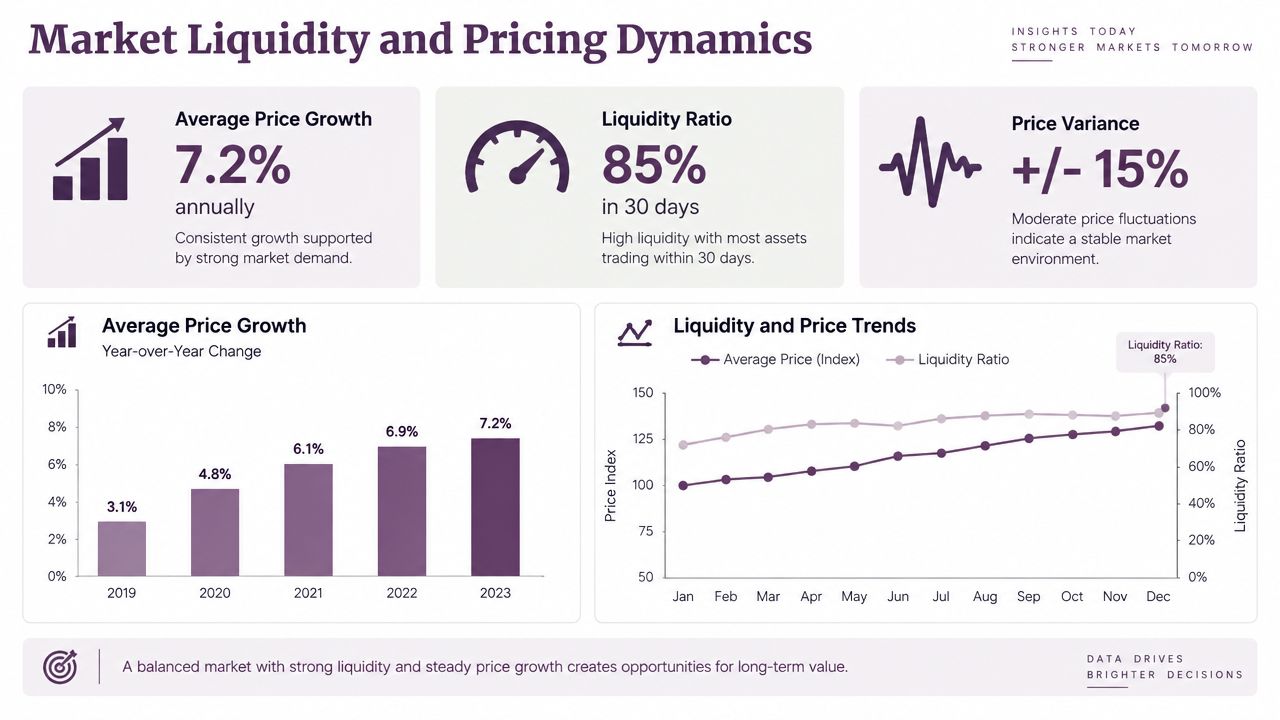
Liv-ex reported that white wine's traded value rose 650% from 2010 to 2025, while Burgundy represented 69.3% of white-wine trading by value in 2026. These figures describe the category rather than the prospects of every domaine, appellation or vintage. They establish Burgundy's dominant position within a growing white-wine segment, while bottle-level value still depends on provenance, condition, format and producer reputation.
<a id="volume-can-rise-while-price-falls"></a>
Volume can rise while price falls
iDealwine shifted just over 30,000 bottles of white Burgundy in 2025, a 13% year-on-year increase, while average hammer prices fell from €213 to €193. More bottles changed hands even as the average realised price weakened.
That pairing points to active participation alongside selective demand. Sellers may still find buyers, but reserve prices must reflect current appetite and the quality of the offering. Buyers should separate a genuine repricing from a discount caused by weak provenance, poor presentation or a label with limited secondary-market depth.
Soil and winemaking help explain that selectivity. Wines from highly regarded limestone sites, with concentrated fruit, balanced acidity and careful élevage, can support stronger price tiers, but those attributes do not automatically create rapid resale. A less prestigious appellation may trade more easily at a lower entry point if supply is broader and buyers recognise the style.
Auction reading: Rising turnover proves that bottles are changing hands. It does not prove that every price level is sustainable.
<a id="build-a-comparable-market-view"></a>
Build a comparable market view
A merchant assessing a white Burgundy position should compare:
- Exchange signals: Indicators of trading attention and market direction.
- Auction results: Realised prices, adjusted for lot composition, condition and provenance.
- Retail listings: Replacement-cost evidence, with asking prices treated separately from completed sales.
- Restaurant offers: Useful for hospitality positioning, but not directly comparable with bottle-level resale.
- Producer and appellation context: The basis for explaining price differences between wines from the same region.
Merchants comparing channels also benefit from understanding B2B pricing dynamics, particularly when offer prices and realised prices diverge. For programmatic access to comparable wine pricing, the Wine Labs market data API can support a structured evidence set.
The practical conclusion is clear: value White Burgundy through aligned, cross-channel observations. Match producer, appellation, vintage, format and condition before interpreting a price signal. A single auction result can mislead. Repeated evidence across channels gives a more defensible view of both valuation and liquidity.
<a id="navigating-fragmented-pricing-channels"></a>
Navigating Fragmented Pricing Channels
A white Burgundy bottle rarely has one universally correct market price. Retailers publish offers, auction houses report hammer prices, exchanges reflect active trading and restaurants apply a service-led commercial model. These channels answer different questions, so copying the first visible figure into a valuation file can produce a misleading result.

<a id="the-identity-problem-comes-first"></a>
The identity problem comes first
Burgundy listings often vary in how they display producer names, cuvée names, vineyard details, vintage, bottle size and appellation. A single wine can appear under different naming conventions, while similar records can be mistaken for duplicates. Messy LWIN references make the problem worse when systems depend on exact text matching.
A valuation workflow should resolve the identity before comparing prices. The record needs to distinguish, at minimum:
- Producer and cuvée
- Appellation and climat
- Vintage
- Bottle format
- Channel and transaction status
- Condition and provenance
Without that normalisation, a merchant may compare a retail offer for one format with an auction result for another. A collector may also mistake an old listing for current liquidity.
<a id="consolidation-beats-isolated-browsing"></a>
Consolidation beats isolated browsing
A single retail list is useful for replacement cost, but it won't show whether the bottle sells. An auction result is useful for realised value, but it may reflect a particular lot, seller history or condition. A consolidated platform can place these observations beside one another and preserve historical context.
Wine Labs fine wine market data is designed around this workflow, combining pricing and availability context across market sources and resolving listings to canonical wine identities. That kind of system supports more disciplined quoting, sourcing and reporting because the analyst can compare like with like before assigning a value.
The practical advantage isn't just fewer browser tabs. It's a reduction in category error. White Burgundy's fragmentation is part of its investment appeal, but it also means that weak data hygiene can erase the difference between an attractive purchase and an illiquid bottle carrying an outdated asking price.
<a id="strategic-sourcing-and-portfolio-valuation"></a>
Strategic Sourcing and Portfolio Valuation
A strong white Burgundy portfolio starts with structure, not enthusiasm. Terroir identifies the likely shape of the wine, classification frames its scarcity and cellar practice informs its development risk. Market data then tests whether the bottle has a credible path to resale at the valuation being recorded.
<a id="value-the-bottle-not-the-reputation"></a>
Value the bottle, not the reputation
Begin with a canonical inventory record. Capture producer, wine, appellation, climat, vintage, format, quantity, acquisition cost, storage history and current condition. Then compare the holding with relevant market observations rather than a broad Burgundy benchmark.
A useful decision sequence is:
- Classify the wine. Regional, village, Premier Cru or Grand Cru status establishes the initial comparison set.
- Interpret the site. Limestone and marl may support a more linear structure, while clay-limestone combinations can produce broader texture.
- Assess cellar method. Malolactic fermentation, lees management and oxygen exposure shape the ageing trajectory.
- Check realised market evidence. Use completed transactions where available, then compare current offers and channel spreads.
- Set an action threshold. Decide in advance when a price movement justifies buying, holding, repricing or selling.
This process helps identify opportunities that a prestige-led approach can miss. A less famous appellation with sound structure, reliable provenance and active demand may offer a more practical sourcing proposition than a celebrated bottle priced beyond its current liquidity.
<a id="turn-inventory-into-decisions"></a>
Turn inventory into decisions
Merchants can use portfolio tools to convert stock files into market-valued outputs, monitor price movements and flag relevant changes. Collectors can apply the same logic to drinking-window planning, separating bottles to open soon from those whose provenance and structure justify longer storage.
Auction and news digests add another layer. They can surface unusual lots, producer announcements and changes in buyer attention, but each signal still needs to be checked against the bottle's exact identity and condition. The Wine Labs Burgundy market valuation and auction analysis illustrates the value of connecting market reporting with valuation workflows.
The broader lesson is that terroir and price intelligence shouldn't be treated as separate disciplines. Soil helps explain style, cellar practice helps explain longevity and consolidated transaction data helps explain liquidity. Together, they give collectors and merchants a defensible basis for deciding what to buy, what to hold and when to sell.
Wine Labs consolidates fine-wine pricing from retail, auction, exchange and restaurant channels, then connects those observations to canonical wine identities, portfolio valuation and market tracking. For a white Burgundy portfolio, use Wine Labs to compare like-for-like bottles, monitor changing prices and build sourcing decisions around evidence rather than reputation alone.