Wine Labs · Market intelligence
8 Best Bordeaux Vintages for Buying and Investing
Compare the best bordeaux vintages for quality, longevity, price performance, and availability across retail, auction, and exchange channels.
2009, 2010, and 2005 are the strongest all-round starting points for quality and longevity, while 2000 and 1990 deserve attention when current drinkability and relative value matter. The ranking can change, however, once producer, bottle condition, provenance, and the buying channel enter the decision.
The most famous Bordeaux year isn't automatically the best purchase. A critic-led list can identify outstanding wine, but it won't tell you whether the bottle is available at a sensible price, whether auction provenance supports the asking price, or whether an exchange listing offers better value than retail stock.
This ranking combines drinking quality, aging potential, price performance, cross-channel liquidity, and availability. The regional reputation still matters. So does the market. Bordeaux represented 42.3% of traded value in one Liv-ex weekly snapshot, while U.S. buyers accounted for 50.9% of Bordeaux trade by value, demonstrating why a vintage's ranking should be tested across buyer geographies and channels, not inferred from scores alone (Liv-ex market snapshot).
Wine Labs provides the practical evidence layer by consolidating retail, auction, exchange, and restaurant listings against canonical wine identities. That matters because the same château and vintage can appear under inconsistent names, different bottle formats, or separate records. A useful comparison should match the identical wine first, then examine price, condition, provenance, and availability.
Methodology: Producer selection starts with established wines and credible examples across the Left and Right Banks. Canonical identity matching removes duplicate labels, channel comparison tests like-for-like offers, and provenance review separates an apparently cheap bottle from a genuinely attractive one. A drinking purchase prioritizes maturity and condition. An investment position also needs liquidity, scarcity, and an exit market.
The eight entries below begin with the strongest broad-market choices, move through mature and prestige benchmarks, and finish with vintages whose value depends more heavily on selection. Vintage averages can narrow the search, but they can't replace bottle-level due diligence.
Vintage reputation tells you where to look. Bottle condition and market context tell you whether to buy.
Table of Contents
- 1. 2009 Bordeaux The Perfect Storm Vintage
- 2. 2010 Bordeaux The Structured Ageworthy Classic
- 3. 2005 Bordeaux The Legendary Concentration
- 4. 1982 Bordeaux The Benchmark Legendary Status
- 5. 2015 Bordeaux The Modern Precision Vintage
- 6. 2016 Bordeaux The Contrarian Vintage
- 7. 2000 Bordeaux The Millennium Vintage Classic
- 8. 1990 Bordeaux The Forgotten Treasure Vintage
- Top 8 Bordeaux Vintages Comparison
- Match the Vintage to the Buying Job
<a id="1-2009-bordeaux-the-perfect-storm-vintage"></a>
1. 2009 Bordeaux The Perfect Storm Vintage
2009 remains the strongest all-round candidate for buyers balancing power, approachability, aging potential, recognition, and market access. It is widely regarded as one of Bordeaux's greatest modern years. Robert Parker rated the vintage slightly ahead of 2010 overall, awarding 18 wines perfect 100-point scores in 2009 compared with 10 for 2010. That difference helps explain the vintage's sustained collector demand (Bordeaux vintage reference).
Reputation alone does not make every 2009 attractively priced. Its practical advantage is breadth. The vintage appears regularly across retail, auction, and exchange markets, giving buyers more opportunities to compare the identical château and vintage. Retail usually offers clearer storage records and immediate delivery. Auction can provide older cellar provenance, but requires closer inspection. Exchange listings can show whether several merchants are quoting a competitive price.
<a id="why-2009-ranks-first"></a>
Why 2009 ranks first
The vintage combines concentrated fruit with the structure needed for extended aging. Leading estates offer the most complete expression, while stronger mid-tier properties can provide a more accessible route into the year than trophy names. Robert Parker's broader assessment placed 2005, 2009, and 2010 among the potential greatest Bordeaux vintages he had tasted, supporting 2009's status beyond fashion or short-term demand (Bordeaux vintage chart).
The buying decision should therefore be made at wine level, not vintage level. Compare the exact château, bottle format, condition, provenance, and current availability across channels. Retail can reduce execution risk for a drinking purchase. Auction may suit buyers willing to inspect lots and wait for the right bottle. Exchange data helps test whether the quoted premium is supported by comparable offers.
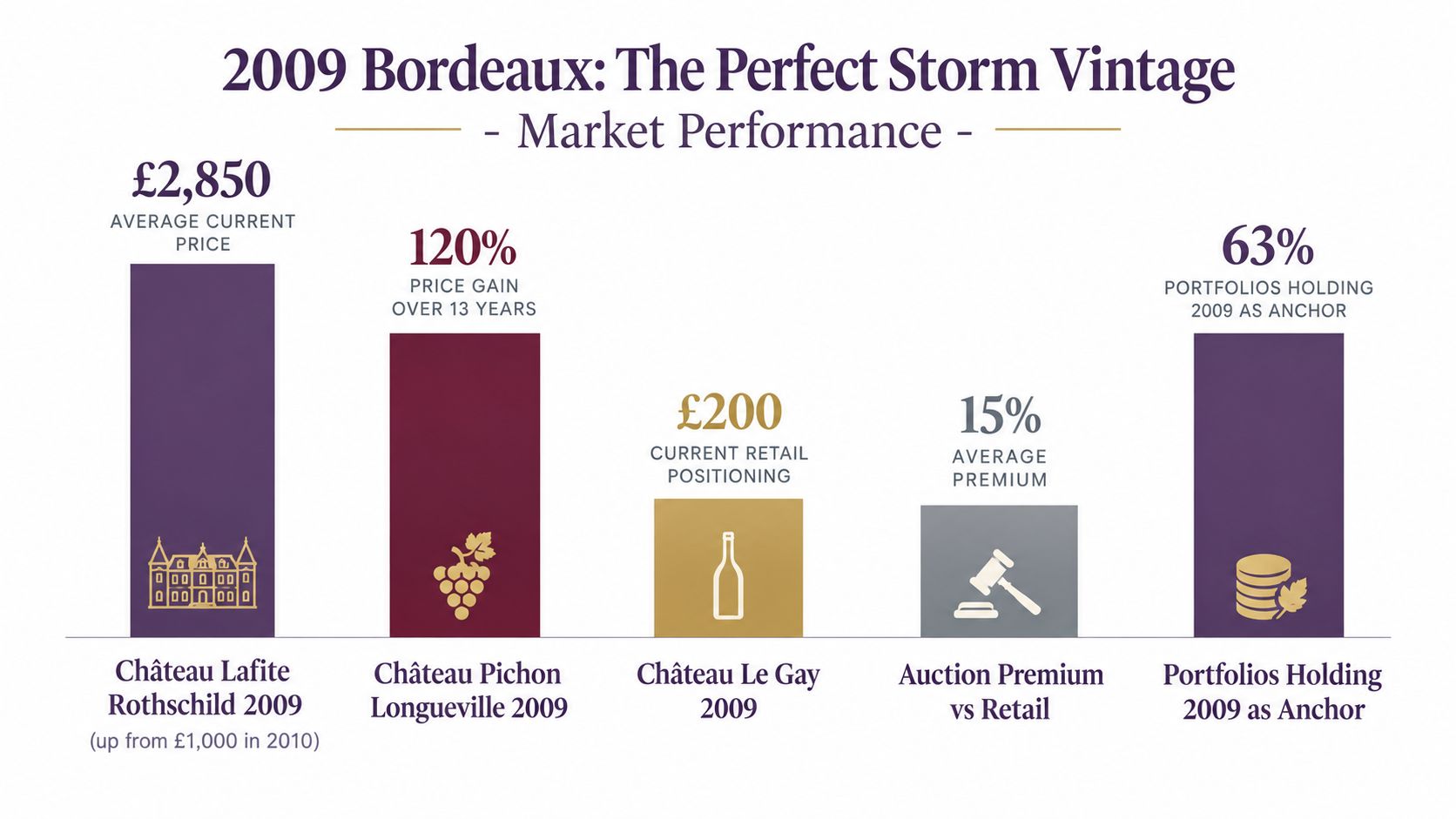
Wine Labs' price histories, availability signals, watchlists, and auction digests provide a practical framework for comparing those routes. Strong demand creates frequent comparison opportunities, but also raises the risk of paying for reputation alone. For a first broadly liquid purchase, 2009 is the clearest choice. Buyers focused on immediate drinking at the lowest entry price may find a mature alternative more efficient.
<a id="2-2010-bordeaux-the-structured-ageworthy-classic"></a>
2. 2010 Bordeaux The Structured Ageworthy Classic
2010 earns second place through structure rather than immediate charm. Bordeaux's driest year since 1949 produced wines with formidable tannic architecture, while the growing season received less than half the rainfall of 2009. Difficult flowering reduced overall yields by about 10% versus 2009, adding scarcity to an already highly regarded vintage, according to this Bordeaux vintage reference.
That profile changes the buying calculation. A young 2010 can appear stern beside a more generous 2009, yet its restraint may support longer development in the cellar. The strongest candidates are therefore wines whose producer, format, provenance, and storage condition justify waiting, rather than bottles selected solely because the vintage ranks highly.
<a id="the-market-case-for-patience"></a>
The market case for patience
2010 was the most expensive Bordeaux vintage ever released en primeur in spring 2011, according to the vintage reference. That launch record provides context, not a forecast. En primeur pricing can separate from later transactions, so buyers should compare present retail, auction, and exchange evidence with the original release narrative before accepting a reputation premium.
Channel choice also affects the decision. Retail is usually the clearest route when condition information and execution certainty matter. Auction can produce better access to verticals or regional collections, but fill level, storage history, and lot notes determine whether the apparent discount compensates for added risk. Exchange listings help test whether retail and auction asking prices are moving together, or whether one channel is carrying an unsupported premium.
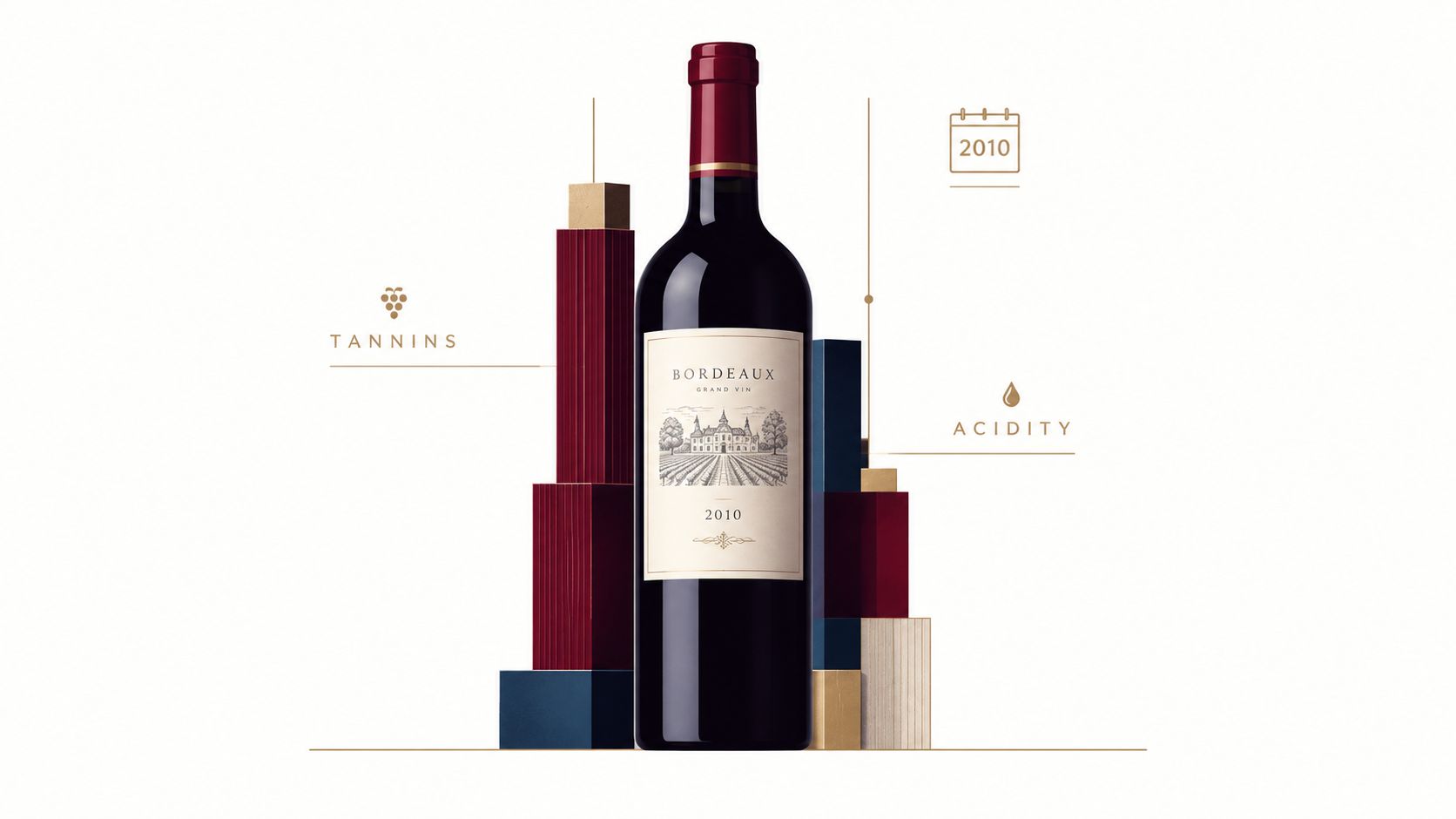
Buying rule: Choose 2010 when the purchase depends on cellaring time and future development. Choose 2009 when earlier accessibility and broader market recognition matter more.
Wine Labs' Cellar Pricer can help compare the holding decision, while portfolio tracking shows whether a cellar is becoming too concentrated in one powerful, slow-maturing year. For either drinking or investment, the strongest opportunity is a well-stored bottle priced below comparable offers for the same producer and format.
<a id="3-2005-bordeaux-the-legendary-concentration"></a>
3. 2005 Bordeaux The Legendary Concentration
2005 earns its benchmark status through the combination of reputation, age, and present drinking potential. It appears in modern Bordeaux rankings alongside 2009, 2010, 2016, 2018, 2020, and 2022, with a listed score of 98 (Bordeaux vintage chart). That ranking establishes market recognition. The buying decision still depends on the bottle, producer, and channel.
For drinkers, 2005 offers an advantage over younger classics. The strongest wines have moved beyond primary fruit into greater complexity, while their structure can support further development. It therefore fits several buying jobs: opening at dinner, replenishing a cellar, or taking a measured position in the market. Its price-performance depends on whether the bottle's maturity justifies its premium over younger vintages.
<a id="why-producer-selection-matters-more-now"></a>
Why producer selection matters more now
At this age, condition can outweigh vintage quality. A pristine 2005 from a reliable retailer may be preferable to a cheaper auction bottle with uncertain storage. Retail usually offers clearer recourse and provenance. Auctions can expose rare formats and mature private collections, but incomplete lot descriptions transfer more risk to the buyer. Exchange listings help establish a price range, though the visible offer still requires bottle-level review.
Availability also changes the valuation. A retail bottle with documented storage may command more than an auction lot, while an exchange listing can reveal whether that premium reflects genuine condition or seller expectations. Compare the same producer and format across channels before treating a discount as value.
Canonical identity matching matters because label variants, formats, and merchant naming can create duplicate holdings or misleading comparisons. Wine Labs can consolidate those records before portfolio valuation, helping separate genuine exposure from apparent duplication.
Market conditions add another filter. Liv-ex's Bordeaux 500 stood at 275.7, with a two-year return of -11.2% and a five-year return of -19.4% (Liv-ex indices). Those figures show why vintage prestige does not remove cycle risk. 2005 is strongest when mature drinking quality, producer evidence, and a defensible cross-channel price align.
<a id="4-1982-bordeaux-the-benchmark-legendary-status"></a>
4. 1982 Bordeaux The Benchmark Legendary Status
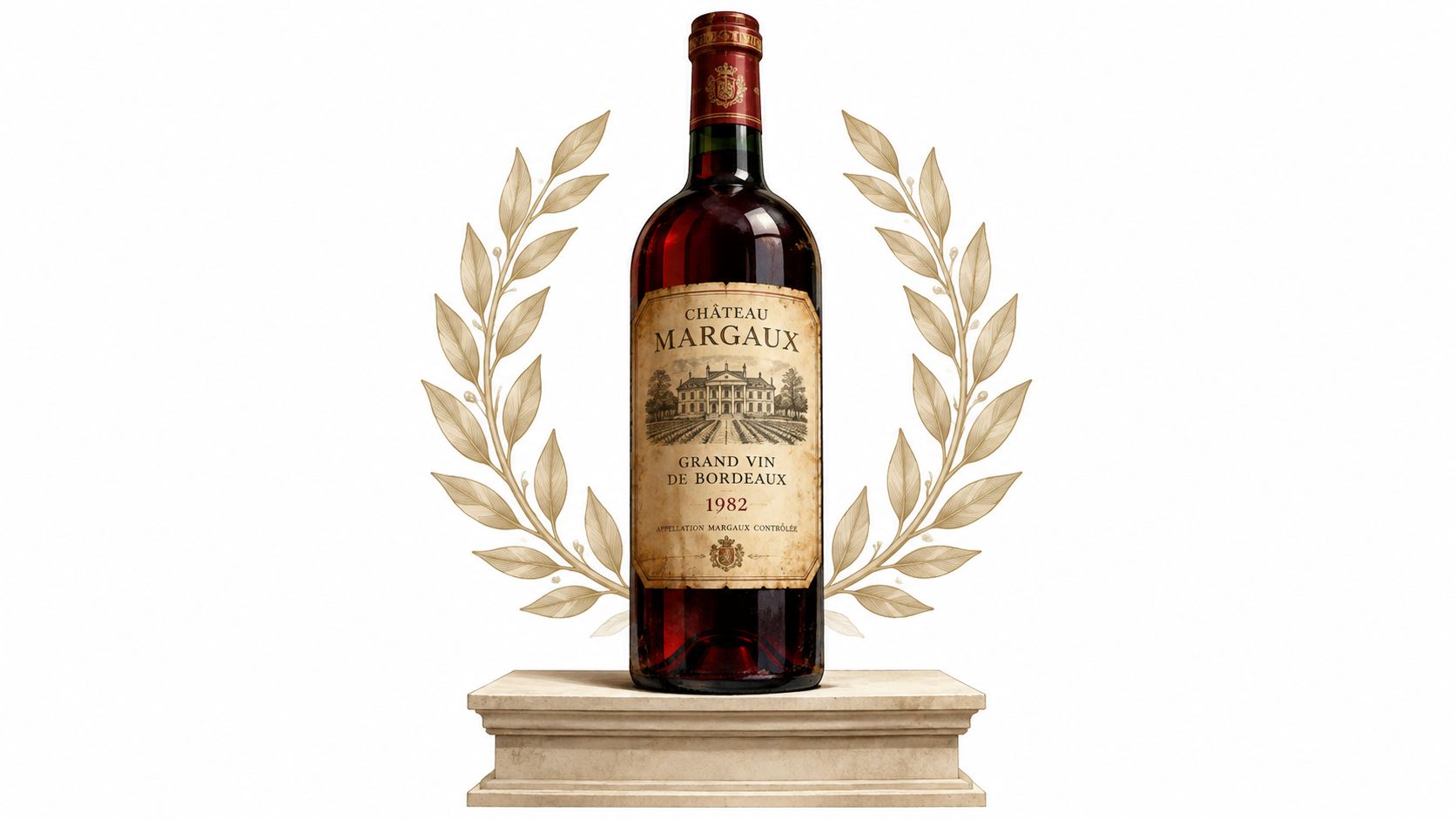
1982 is the prestige purchase, not automatically the value leader. Its appeal combines scarcity, historic importance, and mature drinking quality, but an iconic château can carry a premium that leaves little room for storage or provenance mistakes. That makes 1982 a test of bottle selection as much as vintage reputation.
Robert Parker identified 2005, 2009, and 2010 as possible candidates for the three greatest Bordeaux vintages he had tasted. 1982 remains a defining historic reference among collectors, as reflected in this Bordeaux vintage reference. Age changes the decision, however. Fill level, label and capsule condition, storage history, and provenance can matter more than the year printed on the bottle.
<a id="buy-the-bottle-not-just-the-year"></a>
Buy the bottle, not just the year
Retail usually offers the clearest route when a merchant documents storage and condition. Auctions may expose mature bottles from private cellars, but the lot description becomes part of the evidence supporting the purchase. Exchange listings add price discovery, while the lowest visible ask may signal weaker condition, an uncommon format, or a seller expectation that has not been tested.
Compare bottle-level evidence before comparing prices. Check the fill, capsule, label, provenance chain, format, and whether the written description matches the physical bottle. Wine Labs' auction digest can surface these details across 60+ houses, while portfolio tools show whether a prestige holding has become too concentrated.
The practical market framework is cross-channel comparison. Review the same château and format in retail, auction, and exchange listings, then separate drinking value from scarcity value. Wine Labs' Bordeaux market digest for U.S. demand and vintage positioning provides additional context for that review.
Condition outranks discount: A cheaper 1982 with an incomplete history is not automatically a bargain. For mature Bordeaux, provenance forms part of the wine's value.
Choose 1982 for a ceremonial bottle, collection anchor, or scarcity-led position. Choose 2000 or 1990 when mature drinking and price-performance matter more than prestige.
<a id="5-2015-bordeaux-the-modern-precision-vintage"></a>
5. 2015 Bordeaux The Modern Precision Vintage
2015 earns its place through usability rather than historical prestige. It offers collectors a younger entry point than 1982, 1990, 2000, or 2005, while avoiding the scarcity premium attached to those mature benchmarks. Its value depends on whether producer quality, drinking development, and current pricing align.
The year should be assessed estate by estate. Vineyard position, selection, élevage, and producer consistency determine whether a bottle justifies cellar space. The practical question is whether a château's 2015 combines a credible quality profile with a price that leaves room for future demand.
<a id="accumulation-needs-discipline"></a>
Accumulation needs discipline
Retail is often the clearest channel for building a small position. Inventory is easier to monitor, and condition details are usually more accessible. Auction lots may later offer better-established storage histories, but individual lots can differ sharply in provenance and presentation. Exchange listings show whether a scarcity premium appears across the market or only reflects a temporary shortage in one venue.
Wine Labs' canonical identities and historical tracking help separate genuine price movement from changes in listing mix. A watchlist can follow the same château and format across retail, auction, and exchange sources. Alerts then identify new offers without requiring a buyer to follow every market rumor.
The wider market makes entry price important. Since the most recent 2022 peak, Bordeaux prices are down 27% on average, while mature Bordeaux fell 5% over the past five years, compared with a 27% drop for young vintages (Bordeaux market review). The gap supports a selective approach: a younger vintage needs producer-level evidence and a defensible price, not merely a favorable reputation.
2015 suits staged accumulation. Compare the same wine across channels, verify condition and availability, and buy only when the retail, auction, and exchange evidence supports the entry price. For drinking, it can offer a more accessible modern profile. For investment, selectivity matters more than the vintage label itself.
<a id="6-2016-bordeaux-the-contrarian-vintage"></a>
6. 2016 Bordeaux The Contrarian Vintage
2016 rewards selection more than reputation. It is widely regarded as a standout modern Bordeaux year, but the investment case changes sharply by château, bottle condition, and sales channel. Regional acclaim can identify a starting point, not a buying decision. A vintage chart may help frame the year, while producer evidence determines whether a particular wine deserves its premium.
The gap between reputation and execution is especially important here. A leading estate may offer concentration, freshness, and long-term development, while nearby properties show different levels of ripeness and balance. Buyers should therefore rank the château and format before treating the vintage label as evidence of value.
<a id="where-the-contrarian-case-works"></a>
Where the contrarian case works
Retail listings make it easier to compare estates and identify remaining mixed inventory. Auction lots can add provenance, storage information, and bottle-condition detail, but a low hammer price may signal weaker evidence rather than a genuine bargain. Exchange listings help test whether demand is consistent across the market, although they may provide less detail about presentation and storage.
Wine Labs' identity matching lets buyers compare the same producer and format across retail, auction, and exchange listings. Reviewing price history, availability, and auction descriptions together gives a clearer valuation than relying on a vintage average. The Wine Labs Bordeaux en primeur analysis provides a useful framework for placing release information and merchant pricing beside broader market evidence.
The contrarian opportunity appears when a respected 2016 estate offers quality exposure without the full premium attached to Bordeaux's most universally celebrated years. Retail may provide easier access, auctions may reveal better-provenanced bottles, and exchanges may show whether the price holds beyond one venue. For drinking, buy the producer and condition that fit the intended window. For investment, purchase only estates where producer-level evidence supports the discount, rather than buying 2016 indiscriminately.
<a id="7-2000-bordeaux-the-millennium-vintage-classic"></a>
7. 2000 Bordeaux The Millennium Vintage Classic
2000 earns its place through balance rather than label appeal. The vintage now combines mature drinking, collector recognition, and broad availability across specialist retail, auction, and exchange channels. That mix gives it a different role from younger, more structured years and from rarer trophy vintages.
Drinking quality and market performance still need separate tests. For near-term consumption, 2000 can make more sense than a tightly wound younger vintage because bottle age reduces the waiting period. Investment buyers face a less automatic case. Improved drinkability does not guarantee appreciation, so price, provenance, condition, and producer strength must support the purchase.
<a id="a-practical-mature-vintage-purchase"></a>
A practical mature-vintage purchase
Retail is often the clearest route when the merchant can document storage and confirm that the bottle is ready to drink. Auctions may provide private-cellar provenance, vertical collections, or formats absent from shops, but condition notes deserve close scrutiny. Exchange listings add a useful market check, showing whether a château's price holds across venues or depends on a single seller.
Wine Labs' auction digest supplies lot context, while Cellar Pricer helps value the specific canonical wine instead of applying a broad vintage average. The portfolio tracker adds a separate buying test: whether 2000 fills a genuine maturity gap or duplicates older Bordeaux already held. Together, these tools connect sourcing evidence with the intended use, drinking or investment.
Market behavior also argues for separating mature Bordeaux from younger stock. Bordeaux Legends 40, which covers exceptional older vintages from 1989 onward, stood at 362.5, with a one-year gain of 2.5% and a five-year decline of 12.1%. The broader Bordeaux 500 performed more weakly over the longer period, according to the cited index data. These figures do not make 2000 risk-free. They show why age and collectible status can produce different behavior among otherwise comparable Bordeaux holdings.
For buyers seeking established maturity without starting at the highest prestige tier, 2000 remains one of the list's most balanced choices. The Wine Labs Bordeaux strategy digest offers further context for assessing market positioning, sourcing, and valuation.
<a id="8-1990-bordeaux-the-forgotten-treasure-vintage"></a>
8. 1990 Bordeaux The Forgotten Treasure Vintage
1990 earns the final place because its strongest advantage is practical: mature drinking quality can be available without the automatic premium attached to more famous benchmark years. It lacks 1982's headline power, yet sound bottles may offer the tertiary complexity buyers seek. That makes the vintage more compelling for drinking than for reputation-led speculation.
Selection matters more at this age than a small difference in vintage ranking. Fill level, cork integrity, label condition, storage records, and provenance can determine the outcome. A well-kept 1990 from a respected château may outperform a celebrated vintage whose bottle has been poorly stored or incompletely documented.
<a id="the-case-for-proven-age"></a>
The case for proven age
Retail provides the clearest route when a merchant can show a credible chain of custody. Auctions may uncover private collections or vertical selections, but thin documentation increases condition risk. Exchange listings offer a separate test: whether a scarcity premium appears across venues or rests on one seller's asking price.
The recent divide between mature and young Bordeaux supports examining 1990 on its own terms. The cited review found older vintages were up about 5% in 2025, while newer vintages fell about 11%, and described a rebound in trophy wine such as Pétrus 2009 after an earlier decline (fine-wine market review). Those figures do not make every 1990 an investment. They do show that younger stock is not automatically the stronger market choice.
Wine Labs' price alerts can flag estate dispersals and unusual availability across channels. Cellar Pricer can then compare the specific bottle's value with its intended drinking window, rather than applying a broad vintage average. For buyers prioritising mature Bordeaux, the evidence points to a simple decision rule: pay for documented condition and accessible pricing, not the 1990 label alone. That makes a sound bottle a rational purchase, while a compromised one remains expensive regardless of its vintage reputation.
<a id="top-8-bordeaux-vintages-comparison"></a>
Top 8 Bordeaux Vintages Comparison
| Vintage | 🔄 Complexity (process/selection) | ⚡ Liquidity / Speed (tradeability) | ⭐ Expected Outcomes (quality / ageability) | 📊 Market Impact (pricing / demand) | 💡 Quick Tip |
|---|---|---|---|---|---|
| 2009 Bordeaux: The Perfect Storm Vintage | Moderate → High: broad regional consistency but increased authentication checks | High: strong trading volume; auctions lead retail by ~12–18% | ⭐⭐⭐⭐⭐ Exceptional ripeness, immediate drinkability + 20–40+ yrs aging potential | High premiums and steady appreciation; widely held as anchor in portfolios | Monitor auction digests and price alerts; verify provenance before purchase |
| 2010 Bordeaux: The Structured Ageworthy Classic | Moderate: requires patience for maturation; straightforward provenance | Moderate–High: active secondary market; exchange/arbitrage opportunities (15–20%) | ⭐⭐⭐⭐ Very structured; long-term (25–50 yrs) ageability | Undervalued vs 2009 (8–12% lower pricing); good entry for long-term holds | Buy for cellar growth; use watchlists for undervalued SKUs across channels |
| 2005 Bordeaux: The Legendary Concentration | High: strong demand → high counterfeiting risk; authentication costs typical 5–10% | High: optimal drinking window now (2023–2045) → strong turnover | ⭐⭐⭐⭐⭐ Powerful, concentrated wines; near/entering peak drinking windows | Top-tier pricing; documented 180–220% appreciation since 2008; trades at premiums | Prioritize third‑party verification and in‑bond/recently‑stored lots |
| 1982 Bordeaux: The Benchmark Legendary Status | Very High: extreme scarcity and provenance scrutiny required | Very High (institutional): deep demand but very limited supply | ⭐⭐⭐⭐⭐ Legendary concentration and longevity; museum‑quality status | Highest per‑bottle valuations; 35–45% premium vs younger equivalents; huge historical gains | Treat as portfolio cornerstone, pay for provenance and authentication (10–15%) |
| 2015 Bordeaux: The Modern Precision Vintage | Low–Moderate: youthful, lower counterfeit risk; establishing track record | High: broad availability; fastest‑growing sub‑40y segment | ⭐⭐⭐⭐ Modern classic: balanced, silky tannins; 20–40+ yrs potential | Priced ~18–25% below 2009/2010 equivalents, accumulation opportunity | Use real‑time pricing to buy discrepancies; model conservative/optimistic CAGR |
| 2016 Bordeaux: The Contrarian Vintage | Moderate: requires selective producer research due to vintage variance | Lower: 30% lower auction volume vs 2015; discounted listings common | ⭐⭐⭐ Variable: top estates excel; many mid‑tier inconsistency risks | Discounts ~30–45% vs adjacent vintages; contrarian value opportunities | Focus on producer‑level reviews and auction lot notes to pick winners |
| 2000 Bordeaux: The Millennium Vintage Classic | Moderate: age checks important but provenance often well‑established | Good: optimal drinking window open; strong restaurant demand | ⭐⭐⭐⭐ Balanced, evolved wines, now at attractive drinkability | Valued 30–50% below 2009/2010 equivalents; supply depletion supports upside | Prioritize condition and provenance; target restaurant liquidations for discounts |
| 1990 Bordeaux: The Forgotten Treasure Vintage | High: significant age‑related risks → meticulous condition/provenance review | Moderate: mature demand but lower volume than flagship vintages | ⭐⭐⭐⭐ Peak maturity; immediate gratification with complex secondary notes | Often undervalued vs 1982/2009 (35–50% discount); growing institutional interest | Rigorously check fill levels/labels; plan drinking window (5–10 yrs) when acquiring |
<a id="match-the-vintage-to-the-buying-job"></a>
Match the Vintage to the Buying Job
There isn't one universal winner among the best Bordeaux vintages. The right selection depends on whether the purchase is meant for dinner, a long cellar hold, a collection milestone, or a tradable market position.
- 2009: Best broad starting point for quality, recognition, and liquidity. Its strong modern reputation and cross-channel demand make it the most versatile choice.
- 2010: Best for structure and long holding periods. Choose it when patience matters more than immediate generosity.
- 2005: Best for mature-market strength. It combines established critical authority with enough age to make drinking a central part of the purchase.
- 1982: Best for prestige and scarcity. Buy the bottle only when provenance and condition justify the premium.
- 2015: Best for younger accumulation. It suits collectors building exposure over time, provided the entry price is disciplined.
- 2016: Best for selective value. Producer-level research matters more than the vintage headline.
- 2000: Best for accessible maturity. It offers a practical bridge between younger Bordeaux and high-cost historic benchmarks.
- 1990: Best for proven age with relative pricing appeal. It works especially well when current drinkability matters more than status.
The first step is to define the job. A drinking purchase should prioritize maturity, storage, format, and the likelihood that the bottle will perform at the table. An investment position needs those factors plus liquidity, scarcity, cross-channel demand, and a credible route to resale.
The second step is to compare the identical canonical wine across retail, auction, and exchange channels in Wine Labs. Don't compare a château's standard bottle with a different format, case configuration, or condition grade and call the difference a market signal. Canonical identity matching gives the comparison a proper foundation, while price histories and availability data show whether an ask reflects a lasting trend or a temporary listing gap.
The third step is due diligence. Verify provenance, condition, bottle format, current availability, and concentration before committing. Cellar Pricer can support file-based valuation, portfolio tracking can expose over-allocation, and watchlists and price-movement alerts can keep a buyer from acting on stale information. Auction digests add lot-level context, while Wine Labs' broader price intelligence connects individual offers to the market around them.
Market reality also argues against using release price as a shortcut. Academic work on Bordeaux en primeur found that 2021 prices averaged about 4% below release, with a median of 10% below release, showing why realized transaction pricing matters more than launch enthusiasm (Liv-ex index and pricing resources). Vintage ranking should therefore remain dynamic. A highly acclaimed year can be unattractive at an inflated entry price, while a less fashionable mature vintage can offer stronger drinking value and a clearer condition-adjusted case.
Weather and availability add another layer. Bordeaux 2022 was described by the CIVB as a “great vintage,” yet AOC output was about 11% below the ten-year average at 4.1 million hectolitres, with drought and unusually low rainfall in July and August cited as causes (2022 Bordeaux report). For 2023, average appellation yield was 12.5 hL/ha, compared with 14.5 hL/ha in 2022, another reminder that availability can shift even between consecutive vintages (2023 Bordeaux vintage report).
The best Bordeaux vintage is the one whose quality, condition, price, and availability fit your purchase thesis.
Wine Labs brings retail, auction, exchange, and restaurant pricing into one comparable view, with canonical identity matching, historical analytics, Cellar Pricer, portfolio tracking, watchlists, alerts, and auction digests. To evaluate these eight Bordeaux vintages against live listings and your own cellar exposure, visit Wine Labs.